
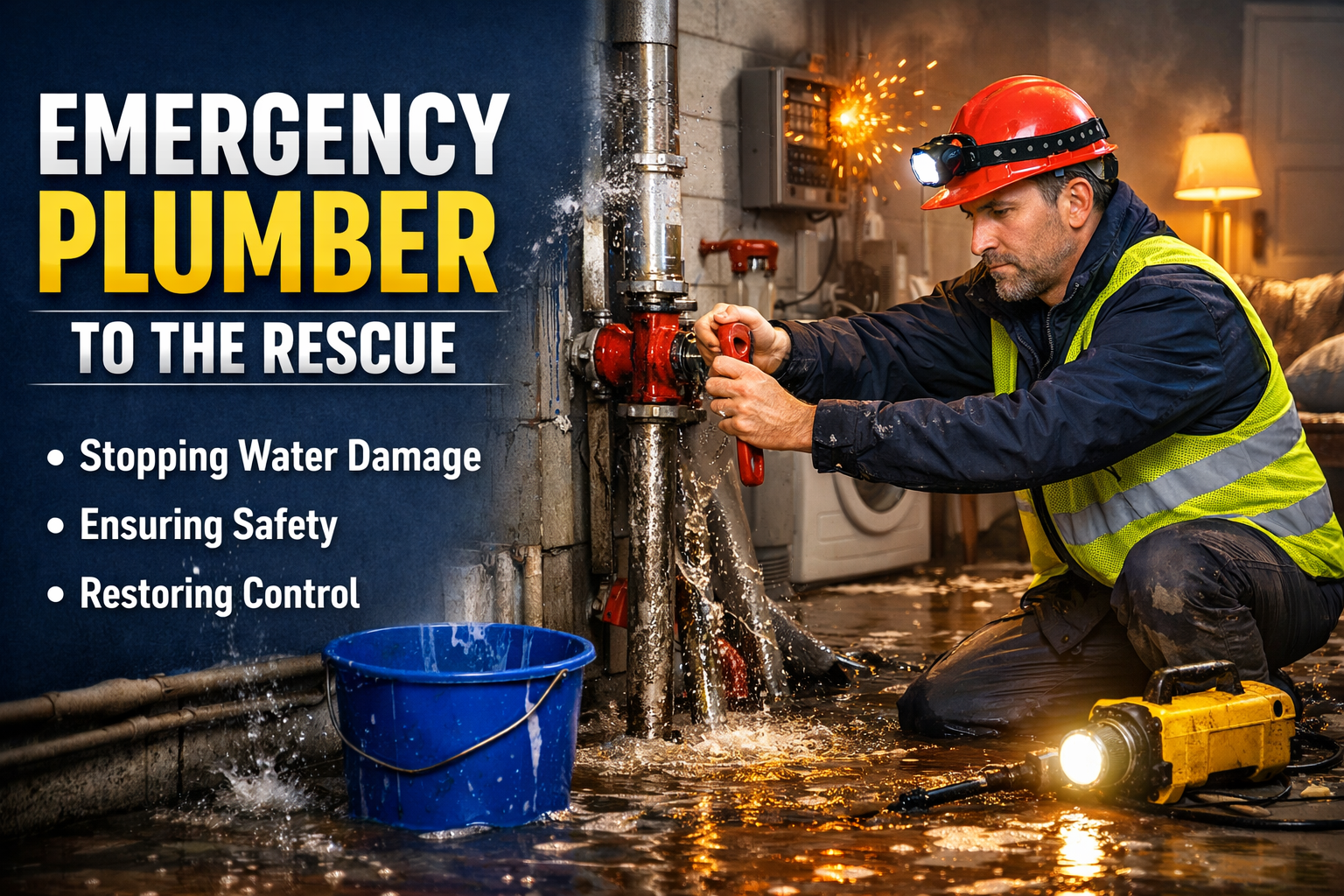

Plumbing problems rarely wait for a convenient time. A pipe can burst at midnight. A toilet can overflow during a holiday. A water heater can fail without warning. When these issues happen, damage spreads fast.
This is where an emergency plumber becomes essential. Their job is not just to fix pipes. It is to protect your home, your belongings, and your safety during sudden plumbing failures. Fast action can mean the difference between a small repair and major damage.
What Counts as a Plumbing Emergency?
When a Plumbing Problem Cannot Wait
Not every plumbing issue is an emergency. A slow drip can wait. But active leaks, flooding, sewage backups, and loss of water require immediate action.
An emergency plumber responds when waiting would cause damage or safety risks.
Common Signs of an Emergency Situation
Sudden water pooling, strong sewer odors, gurgling drains, or no running water are warning signs. These issues often signal hidden problems that can worsen quickly.
Early response protects the home.
Why Speed Matters During Plumbing Failures
Water Damage Spreads Quickly
Water moves fast. It seeps into floors, walls, and ceilings within minutes. Wood swells. Drywall weakens. Mold can start growing in as little as 24 hours.
An emergency plumber acts quickly to stop water at the source.
Delays Increase Repair Costs
The longer water flows, the more damage it causes. Floors may need replacement. Cabinets can rot. Structural repairs become costly.
Fast response limits damage and cost.
What an Emergency Plumber Does First
Shutting Off the Water Supply
The first priority is stopping water flow. Emergency plumbers locate and shut off the main water valve or isolate the problem area.
This single step prevents further damage.
Assessing the Immediate Risk
Once water is controlled, the plumber checks for electrical risks, structural issues, and sanitation concerns. Standing water near outlets or appliances is dangerous.
Safety comes before repair.
Handling Burst Pipes and Major Leaks
Why Pipes Burst Without Warning
Pipes can burst due to age, corrosion, freezing, or pressure buildup. When they fail, water escapes fast.
An emergency plumber identifies the cause, not just the leak.
Temporary Control and Permanent Repair
Emergency plumbers often stabilize the situation first. They may cap or bypass damaged sections. After stabilization, they plan a permanent fix.
This approach protects the home immediately.
Protecting Floors, Walls, and Foundations
Preventing Structural Damage
Water weakens structures over time. Floors can warp. Walls can crumble. Foundations may develop cracks if water pools nearby.
Emergency plumbing action prevents long-term structural harm.
Reducing Moisture Trapped Inside the Home
Even after water stops, moisture remains. Emergency plumbers often advise drying steps to reduce lingering damage.
Dry homes recover faster.
Managing Sewer Backups and Drain Overflows
Why Sewer Issues Are Dangerous
Sewer backups introduce contaminated water into the home. This water can carry bacteria and harmful pathogens.
The Centers for Disease Control and Prevention warns that sewage exposure poses serious health risks.
Immediate Containment and Cleanup Guidance
An emergency plumber stops the backup and isolates affected areas. They help prevent further spread and guide next steps safely.
Sanitation is a top priority.
Emergency Plumber Response to Water Heater Failures
Sudden Water Heater Leaks
A leaking water heater can release large amounts of water quickly. Tanks may crack or fail suddenly.
Emergency plumbers act fast to drain and isolate the unit.
Preventing Flooding and Pressure Damage
By controlling pressure and water flow, emergency plumbers prevent further flooding and damage to nearby areas.
Quick control protects nearby rooms.
Handling Frozen and Thawing Pipes
Why Frozen Pipes Become Emergencies
Frozen pipes can burst when they thaw. Water pressure builds behind ice blockages.
Emergency plumbers address frozen pipes safely to prevent rupture.
Controlled Thawing Prevents Explosions
Professionals use controlled methods to thaw pipes evenly. This avoids sudden bursts that cause flooding.
Careful handling prevents disaster.
Gas Line and Safety-Related Plumbing Emergencies
Plumbing and Gas Safety Overlap
Some plumbing systems connect to gas-powered appliances. Leaks or damage can create fire risks.
Emergency plumbers recognize when gas safety is involved.
Immediate Safety Measures
They shut down affected systems and ensure the area is safe before repairs continue.
Safety always comes first.
Emergency Plumbing for Basements and Crawl Spaces
Why Lower Levels Flood Faster
Basements sit below ground level. Drain backups and groundwater intrusion hit these areas first.
Emergency plumbers respond quickly to basement flooding.
Preventing Mold and Structural Issues
Standing water in basements leads to mold growth and foundation damage. The Environmental Protection Agency highlights moisture control as key to mold prevention.
Quick action protects air quality.
Night, Weekend, and Holiday Plumbing Failures
Why Timing Makes Emergencies Worse
Plumbing failures often happen outside business hours. Waiting until morning increases damage.
Emergency plumbers provide access when others cannot.
Peace of Mind During Stressful Moments
Knowing help is available anytime reduces panic. Calm response leads to better decisions.
Support matters during emergencies.
Temporary Fixes That Stabilize the Home
Stopping the Immediate Threat
Emergency plumbers may apply temporary solutions to stop leaks or block flow. These fixes protect the home short-term.
Stability is the goal.
Planning Long-Term Repairs
Once stable, they explain repair options. Homeowners can plan permanent fixes without pressure.
Clear planning reduces stress.
Preventing Mold and Health Risks
How Water Leads to Mold Growth
Moisture trapped inside walls creates ideal mold conditions. Mold affects air quality and health.
Fast plumbing response reduces this risk.
Protecting Indoor Air Quality
By stopping leaks early, emergency plumbers help protect breathing air inside the home.
Health protection matters.
Emergency Plumber Tools and Expertise
Specialized Equipment for Fast Action
Emergency plumbers carry tools designed for rapid response. These include leak detection devices, pumps, and shutoff tools.
The right tools save time.
Training for High-Pressure Situations
Emergency situations require calm thinking. Professional training helps plumbers work efficiently under stress.
Experience makes a difference.
Reducing Insurance and Liability Issues
Limiting Claim Severity
Insurance claims increase with damage severity. Quick emergency plumbing action limits losses.
Documentation also supports claims.
Preventing Neighboring Property Damage
Leaks can spread to adjacent units or properties. Fast response reduces liability risks.
Responsibility protects relationships.
Educating Homeowners During Emergencies
Explaining What Happened and Why
Emergency plumbers explain the cause of failure. Understanding helps homeowners prevent future issues.
Knowledge empowers better care.
Sharing Immediate Prevention Tips
Simple steps like knowing the main shutoff valve location can prevent future damage.
Prepared homeowners respond faster.
Preventing Repeat Plumbing Emergencies
Identifying Underlying Problems
Emergency plumbers look beyond the visible issue. They check for aging pipes, pressure problems, or system stress.
Root causes matter.
Recommending Follow-Up Inspections
After emergencies, inspections help catch other risks early.
Prevention reduces future emergencies.
Emotional Relief During Plumbing Crises
Reducing Panic and Uncertainty
Plumbing emergencies create panic. Professional response brings control and clarity.
Calm restores confidence.
Helping Families Feel Safe Again
Once water stops and damage is contained, families can relax.
Security matters at home.
Emergency Plumbing for Older Homes
Why Older Systems Fail More Often
Older homes often have aging pipes and outdated materials. These systems fail without warning.
Emergency plumbers understand older infrastructure.
Protecting Historic or Aging Structures
Quick repairs prevent irreversible damage to older homes.
Preservation requires speed.
Why DIY Solutions Often Make Things Worse
Temporary Fixes Can Increase Damage
Improper repairs can worsen leaks or cause pressure buildup.
Emergency plumbers prevent costly mistakes.
Safety Risks of DIY Emergency Repairs
Water near electricity is dangerous. Professionals know how to manage these risks safely.
Safety should not be guessed.
Long-Term Home Protection Starts With Emergency Response
Emergency Response Is the First Line of Defense
Fast action protects the structure, contents, and health of a home.
Emergency plumbers form that first defense.
Turning Crisis Into Controlled Recovery
With the right response, a crisis becomes manageable.
Control replaces chaos.
Conclusion: Why an Emergency Plumber Is Essential When Things Go Wrong
Unexpected plumbing failures can cause serious damage in a short time. Water spreads fast. Health risks rise. Stress levels spike. In these moments, an emergency plumber does far more than fix a pipe.
They protect your home by stopping damage, securing safety, and restoring control. From burst pipes and sewer backups to water heater failures and flooding, emergency plumbers act quickly and effectively when every minute counts.
When plumbing problems strike without warning, fast professional help is not a luxury. It is protection.
Curious for more? Dive deeper on our site now! News Well
