

Most pool owners believe that as long as the water looks blue and the pump is running, their pool is in good shape. In reality, the pool surface itself plays a much bigger role in water quality, comfort, and long-term costs than most people realize. Surface deterioration often happens quietly, long before cracks, stains, or rough patches become obvious.
Understanding what’s really happening beneath the waterline can save you from constant chemical battles, premature repairs, and expensive resurfacing emergencies.
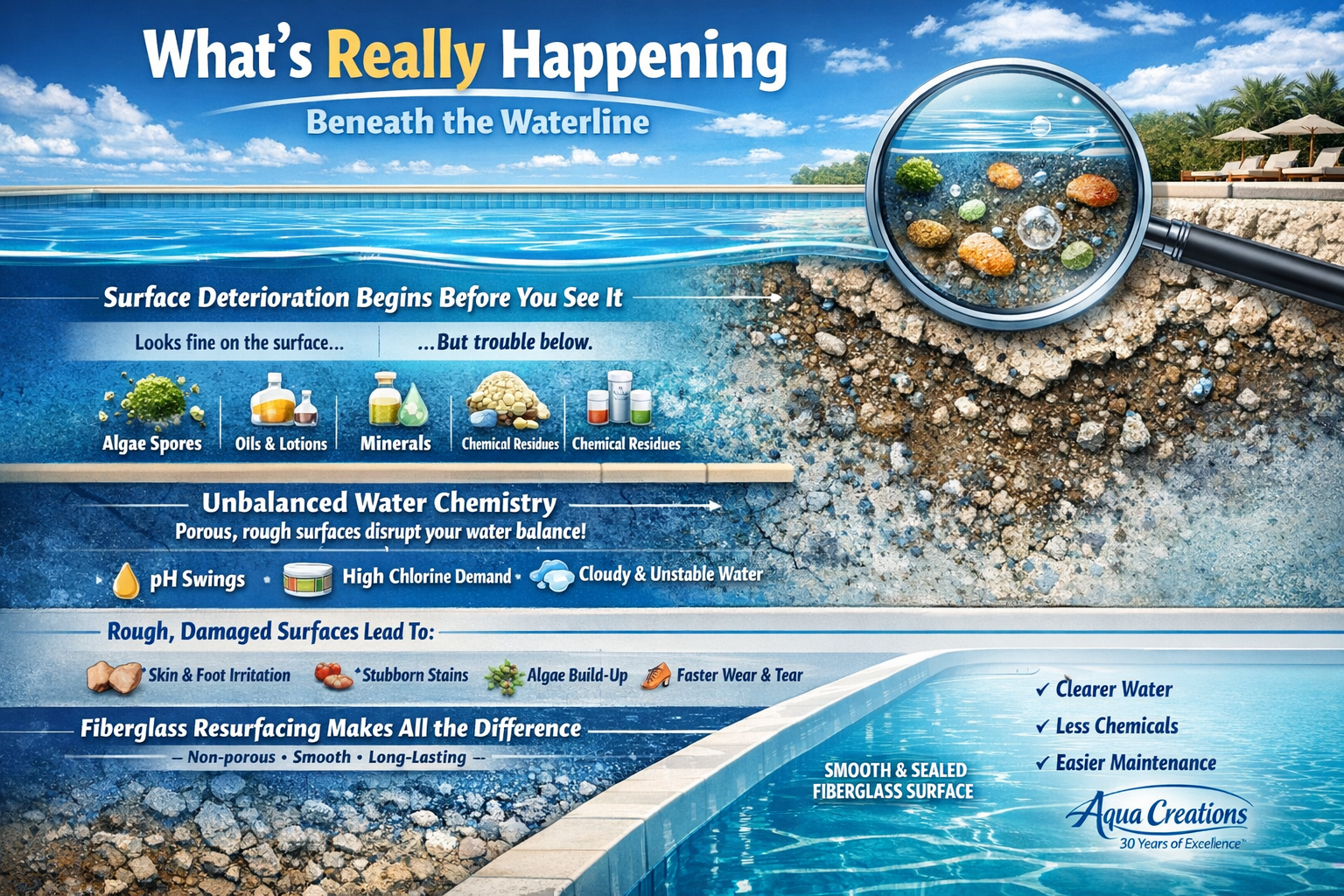
Surface Deterioration Starts Long Before You Can See It
Pool surfaces don’t fail overnight. The damage usually begins at a microscopic level.
Sun exposure, fluctuating water chemistry, and daily use slowly weaken the surface. Over time, the protective layer that once kept the pool smooth begins to break down. As this happens, the surface becomes porous—even if it still looks “fine” from a distance.
Those tiny pores trap:
- Algae spores
- Oils and lotions
- Minerals from hard water
- Chemical residues
Once this cycle begins, cleaning becomes harder and water clarity becomes less consistent.
Why Your Pool Chemistry Keeps Going Out of Balance
One of the biggest misconceptions is blaming cloudy or unstable water solely on chemicals.
When a pool surface deteriorates, it actively interferes with water chemistry. Rough or porous areas absorb chemicals instead of allowing them to circulate evenly. This leads to:
- Constant pH swings
- Higher chlorine demand
- Frequent shock treatments
- Cloudy water that returns days later
Many pool owners respond by adding more chemicals, not realizing the surface is the root cause. This increases costs and can actually accelerate further surface damage.
Rough Surfaces Are More Than a Comfort Issue
Most people notice surface problems when the pool starts feeling rough on feet, hands, or swimsuits. But roughness is more than an irritation—it’s a warning sign.
As a surface erodes:
- Swimmers experience scrapes and abrasions
- Swimsuits wear out faster
- Dirt and algae cling more easily
- Cleaning becomes less effective
In commercial pools, rough surfaces can also become a liability issue, especially where safety regulations are involved.
Stains Are Often a Symptom, Not the Problem
Staining is usually treated as a cosmetic issue, but it often signals deeper deterioration.
Mineral stains, discoloration, or dark patches form more easily when the surface is no longer sealed. Once stains penetrate the surface, no amount of brushing or chemical treatment will permanently remove them.
At that stage, resurfacing is not about appearance—it’s about restoring the pool’s function.
Why Waiting Too Long Makes Repairs More Expensive
Delaying surface repairs rarely saves money. In fact, it often does the opposite.
As deterioration progresses:
- Cracks expand and spread
- Structural layers become exposed
- Water loss increases
- Equipment works harder to compensate
What could have been a straightforward resurfacing project can turn into structural repairs, plumbing issues, or prolonged downtime—especially for commercial pools.
Why Fiberglass Surfaces Resist Deterioration Better
Not all pool surfaces age the same way. Traditional finishes like plaster are more vulnerable to chemical erosion and surface breakdown over time.
Fiberglass resurfacing creates a non-porous, sealed finish that resists:
- Chemical absorption
- Algae growth
- Staining
- Rough texture development
Because water can’t penetrate the surface, it stays smoother, cleaner, and more stable for significantly longer periods.
The Difference Experience Makes in Pool Resurfacing
Surface deterioration isn’t just about materials—it’s about application and expertise.
Companies with decades of hands-on experience understand:
- How Southern California sun accelerates wear
- How local water conditions affect surfaces
- How to properly prepare and bond resurfacing layers
- How to ensure finishes cure correctly for long-term durability
This is where Aqua Creations stands out. With over 30 years of experience and award-winning fiberglass resurfacing technology, their approach doesn’t just cover surface problems—it eliminates the causes behind them. Their work consistently results in smoother finishes, clearer water, and pools that are easier to maintain year after year.
Signs Your Pool Surface May Be Quietly Failing
Many pool owners miss these early warning signs:
- Water never stays clear for long
- Increased chemical usage without better results
- Stains that return after cleaning
- Slight roughness that seems to spread
- Algae forming despite proper sanitation
Catching these issues early can prevent unnecessary stress and expense.
A Well-Maintained Surface Changes Everything
When a pool surface is properly resurfaced and sealed:
- Chemicals work more efficiently
- Water stays clearer with less effort
- Cleaning takes less time
- Swimmers enjoy a smoother, safer experience
- Long-term maintenance costs drop
The pool stops feeling like a constant project and starts feeling like what it was meant to be—a place to relax.
Final Thoughts
Most pool owners focus on water, pumps, and filters, while overlooking the one element that touches everything: the surface itself. Surface deterioration doesn’t announce itself loudly—it quietly creates problems until they’re impossible to ignore.
Understanding how surfaces age, why they fail, and how professional fiberglass resurfacing can restore both performance and appearance puts you back in control of your pool. With the right expertise and materials, your pool doesn’t just look better—it works better for years to come.
Curious for more? Dive deeper on our site now! News Well
