
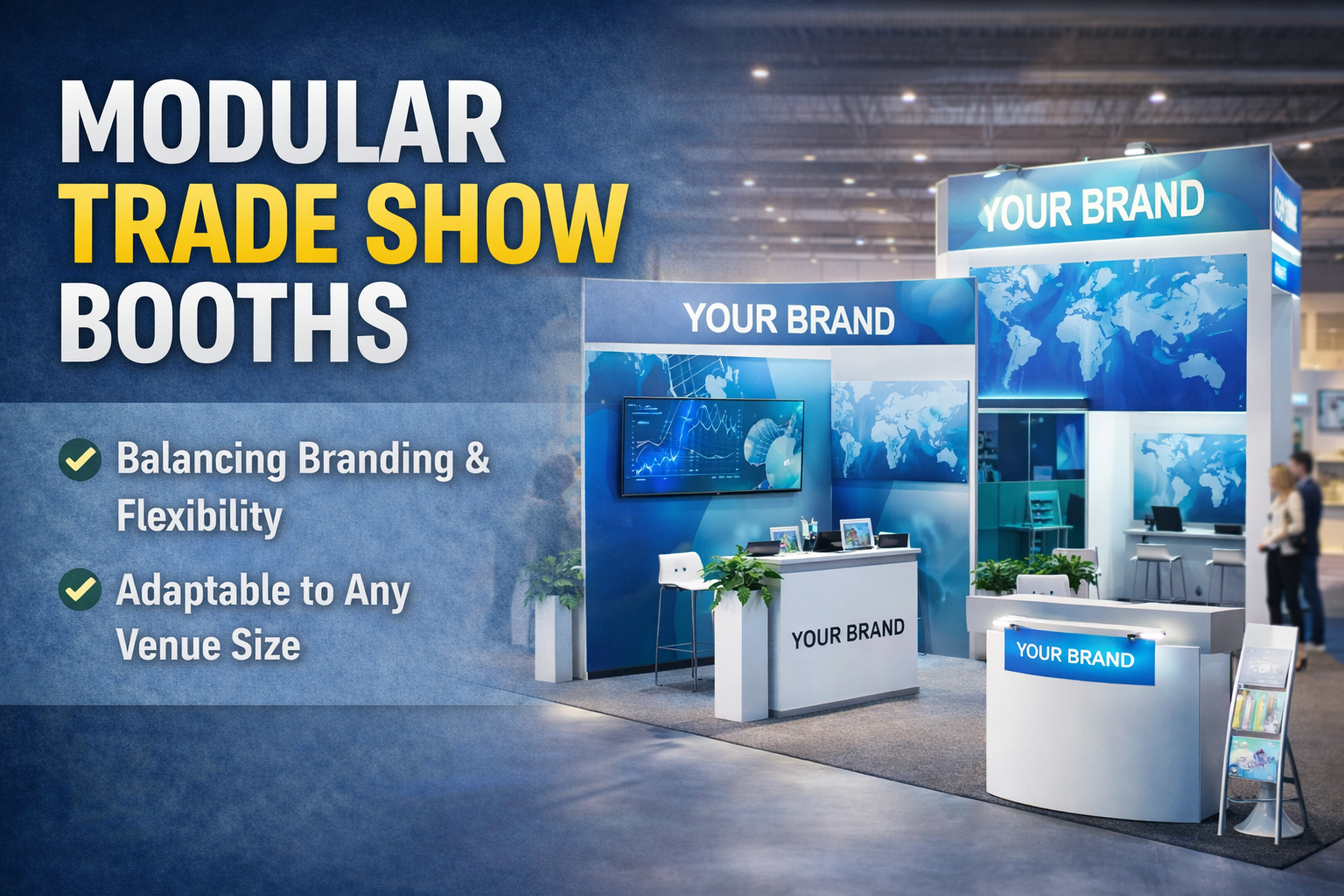

Trade shows are fast-paced. One event may require a small booth. Another may need a large footprint. Sometimes the audience changes. Sometimes the message changes. Through all of this, one thing must stay the same—brand identity. This is where modular trade show booths prove their value.
Brands today need booths that look strong and consistent but can also change shape, size, and layout when needed. A booth that looks great but cannot adapt quickly becomes a burden. On the other hand, a booth that is flexible but weak in branding fails to stand out. The real challenge is balance.
What Modular Trade Show Booths Really Are
Understanding the Modular Booth System
Modular trade show booths are built using reusable components. These components include frames, panels, graphics, lighting, and digital elements that connect easily. The same pieces can be arranged in different ways for different events.
This system allows brands to change booth size and layout without starting over each time.
How Modular Booths Differ From Custom Builds
Traditional custom booths are built for one layout. They look impressive but lack flexibility. Modular booths, on the other hand, are designed to evolve.
They combine structure with freedom. This balance supports both branding and adaptability.
Why Branding Still Matters at Trade Shows
First Impressions Drive Engagement
At a trade show, first impressions happen in seconds. Attendees scan the floor quickly. Booths that look clear, professional, and branded attract attention.
Strong branding helps visitors recognize who you are and what you offer without confusion.
Consistency Builds Trust
Brand consistency matters across all touchpoints. When trade show visuals match websites, ads, and product materials, trust grows.
Modular trade show booths help maintain this consistency across multiple events and locations.
How Modular Booths Support Strong Brand Identity
Reusable Branded Elements
Logos, brand colors, and messaging panels are built into modular systems. These elements stay consistent even when layouts change.
This ensures the brand looks the same whether the booth is small or large.
High-Quality Graphics and Materials
Modern modular booths use fabric graphics, rigid panels, and clean finishes. These materials look polished and professional.
High-quality visuals help modular booths compete visually with fully custom designs.
Flexibility That Meets Real-World Trade Show Needs
Adapting to Different Booth Sizes
Trade shows vary. One event may offer a 10×10 space. Another may allow a 20×30 layout. Modular booths adjust easily.
Panels can be added or removed without affecting the overall look.
Easy Reconfiguration for Different Audiences
Some events focus on buyers. Others focus on partners or media. Modular booths allow layout changes to support different goals.
Demo areas, meeting spaces, and display zones can be rearranged as needed.
Balancing Branding and Flexibility Through Smart Design
Designing With a Core Brand Structure
The best modular booths start with a core structure. This includes key visuals, messaging, and layout zones that stay consistent.
Flexibility is added around this core, not instead of it.
Planning for Change From the Start
Good modular design assumes change will happen. Graphics are made easy to swap. Frames are sized to expand.
This planning ensures branding stays strong even as the booth evolves.
Role of Modular Trade Show Booths in Experiential Marketing
Supporting Interactive Experiences
Experiential marketing depends on interaction. Modular booths can support screens, demo stations, and hands-on displays.
These elements fit into the structure without disrupting branding.
Creating Familiar Yet Fresh Experiences
Visitors may see the same brand at multiple events. Modular booths allow the experience to feel familiar but not repetitive.
Small changes keep the experience fresh while preserving brand identity.
Operational Benefits That Protect Brand Consistency
Faster Setup Reduces Errors
Complex setups increase the risk of mistakes. Modular systems are designed for quick, repeatable assembly.
Faster setup means fewer branding errors on-site.
Easier Training for Booth Staff
When the booth layout follows a familiar structure, staff adapt faster. They know where products are and how traffic flows.
This improves visitor experience and brand presentation.
Cost Control Without Sacrificing Brand Quality
Long-Term Budget Efficiency
Modular trade show booths reduce the need to build new displays for each event. Reuse lowers long-term costs.
Savings can be redirected into better graphics, lighting, or technology.
Better Return on Investment
A booth that works across many events improves ROI. Branding stays consistent while flexibility reduces rebuild expenses.
This balance supports smarter event marketing decisions.
Logistics and Transport Advantages
Easier Shipping and Storage
Modular components pack efficiently. This reduces shipping costs and storage space.
Lower logistics stress helps teams focus on engagement and branding.
Compliance With Venue Regulations
Trade shows follow strict rules. Modular booths are designed to meet height, safety, and accessibility standards.
Compliance protects the brand from last-minute changes or penalties.
Industry Use Cases for Modular Booth Flexibility
Technology and SaaS Exhibitions
Tech brands change messaging often. Modular booths allow fast updates without redesigning the entire booth.
Screens and demo stations integrate smoothly.
Manufacturing and Industrial Trade Shows
Product size and layout needs change across events. Modular booths adjust to showcase different equipment.
Brand visuals remain clear and professional.
Healthcare and Consumer Events
Healthcare and consumer brands rely on clarity and trust. Modular booths create clean, welcoming environments.
Consistent branding supports credibility and comfort.
Measuring Success With Modular Booths
Brand Recognition Across Events
When visitors recognize the booth style and branding, consistency is working. Modular booths help build this recognition.
Repeated exposure strengthens brand memory.
Engagement and Lead Quality
Flexible layouts allow better interaction. This improves dwell time and lead quality.
Stronger engagement reflects successful balance between branding and flexibility.
Avoiding Common Mistakes With Modular Booths
Over-Flexibility That Hurts Branding
Too much change can weaken brand identity. Every configuration should still feel like the same brand.
A clear brand guide helps prevent this issue.
Ignoring Future Needs
Designing only for current needs limits flexibility. Modular booths should plan for future growth.
Scalability protects long-term branding efforts.
Choosing the Right Modular Trade Show Booth Approach
Focus on Brand First, Flexibility Second
Brand identity should guide design decisions. Flexibility should support the brand, not replace it.
This mindset keeps booths strong and recognizable.
Think Long-Term, Not Event-by-Event
Modular booths work best as part of a long-term strategy. Each event builds on the last.
Consistency grows over time.
Conclusion: Why Modular Booths Offer the Best of Both Worlds
Modular trade show booths succeed because they solve a real problem. Brands need to stay recognizable while adapting to changing event needs. Modular systems make this possible.
By combining reusable branded elements with flexible layouts, modular booths protect identity without limiting creativity. They support experiential marketing, control costs, simplify logistics, and improve engagement.
In a trade show world that demands speed and consistency, modular trade show booths offer a practical, scalable solution. When branding and flexibility work together, the result is a stronger, smarter exhibition presence that grows with the brand.
Curious for more? Dive deeper on our site now! News Well
