
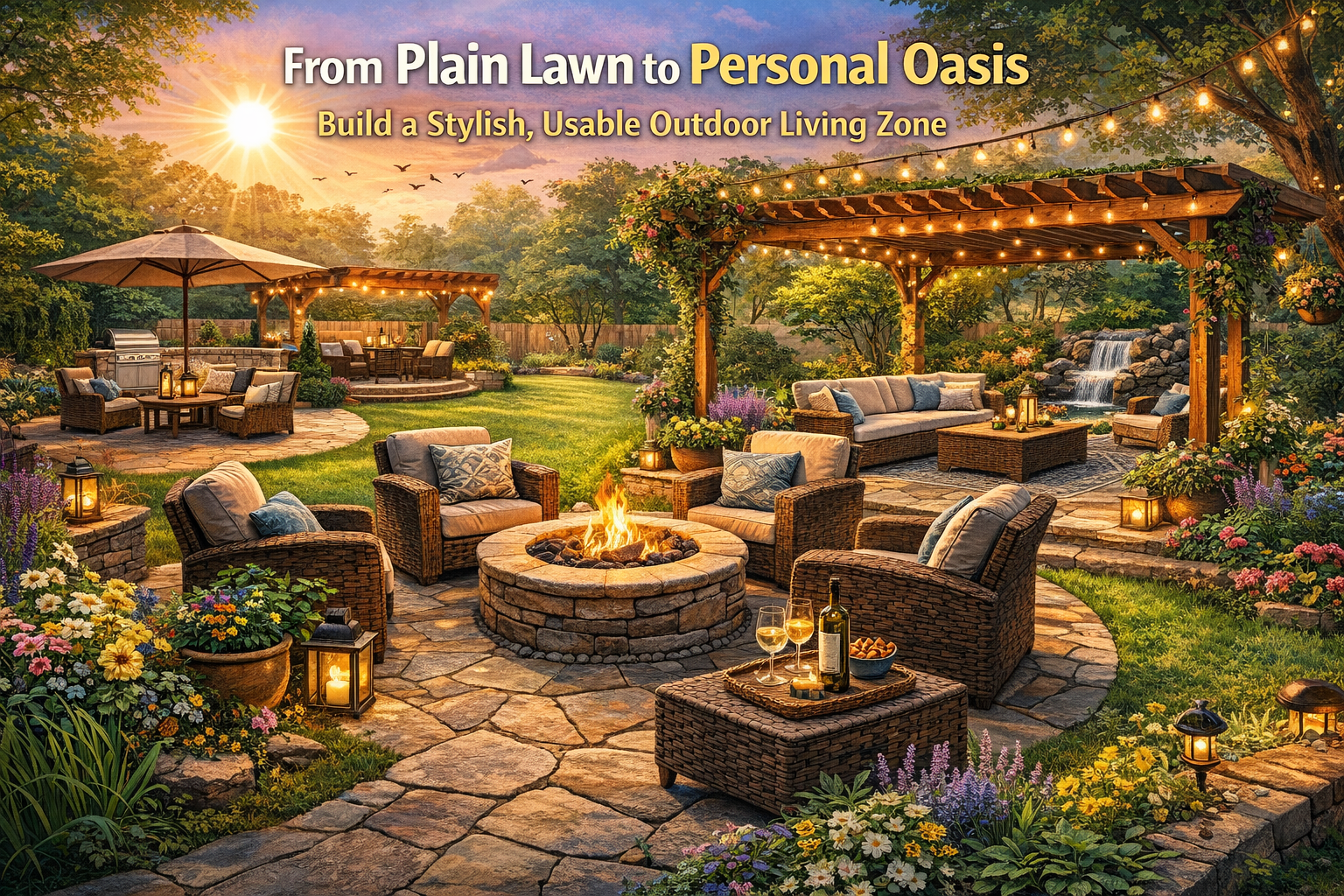

A backyard can be many things. It can be a patch of grass you mow every week. Or it can be the most used “room” of your home. The difference usually isn’t budget. It’s planning.
A practical outdoor space supports how you actually live. It gives you places to sit, eat, move around, and store what you need. A beautiful space does that while feeling calm and intentional. You can get both. You just need to make a few clear decisions before you buy plants or patio furniture.
Below is a step-by-step approach to turning an average yard into an outdoor living zone that looks good and works hard.
Start With Real-Life Use, Not a Fantasy
Before you sketch anything, ask one simple question: What do I want to do out here most often? Not once a year. Most weekends. Most evenings.
Common answers include:
- Eating outside with family
- Hosting friends
- Reading or lounging quietly
- Letting kids play safely
- Gardening
- Giving pets a durable area
- Adding privacy from neighbors
Write down your top two priorities. Only two. This keeps the plan focused and prevents the yard from becoming a cluttered mix of half-finished ideas.
Now, walk the yard and take notes. Where does the sun hit in the morning? Where is it brutally hot at 3 p.m.? Which spots stay soggy after rain? Where do you naturally enter the yard from the house? These details shape the layout more than any trend ever will.
Transitioning from “ideas” to “design” starts here. Use and conditions first. Style later.
Map the Space: Create Zones That Make Sense
The easiest way to make a yard feel designed is to break it into zones. This doesn’t require fences. It requires intent.
A simple zone plan often includes:
- A dining zone near the house
- A lounging zone slightly farther out
- A utility zone for storage, trash bins, compost, or a shed
- A play or open zone for movement (kids, pets, yard games)
- A garden zone (optional)
Zones solve a practical problem: people need clear places to do things. They also solve a visual problem: the yard looks organized instead of random.
When placing zones, think in terms of flow. You should be able to walk from the back door to seating without stepping through mulch. You should be able to carry food to a table without dodging planters. And you should not have to cross the “quiet zone” to reach the trash bins.
Short sentence. It matters.
Choose a Strong Base: Surfaces That Define the Experience
The surface underfoot sets the tone. It also determines how usable your space is. Mud, uneven grass, or crumbling pavers quickly ruin the “oasis” feeling.
Popular base options include:
- Concrete patios: Durable, clean lines, often budget-friendly.
- Pavers: Great for design flexibility and drainage. More labor-intensive.
- Gravel: Affordable and permeable, but needs edging and regular raking.
- Wood or composite decking: Warm, comfortable, and ideal for uneven yards.
If your yard slopes or has poor drainage, a raised structure can help you reclaim space. This is often where experienced deck builders make a noticeable difference, because the long-term performance of a deck depends on correct footings, framing, and water management—not just the boards you see on top.
Also consider transitions between surfaces. A small step down from a deck to a gravel path can feel natural. A harsh drop into the lawn feels awkward. Small changes add up.
Add Shade and Shelter for Comfort You Can Count On
Many backyards fail for one reason: they are too hot, too bright, or too exposed. Comfort is not optional. It’s the whole point.
Start by tracking shade patterns. You might discover the best lounging spot is not where you assumed. Then choose your shade solution based on how permanent you want it to be:
- Umbrellas: Flexible and affordable, but limited coverage.
- Pergolas: Add structure and style; can be upgraded with fabric or vines.
- Shade sails: Modern look, good coverage, needs strong anchor points.
- Covered patios or roof extensions: Most effective and most expensive.
Shelter also includes wind. If your yard is breezy, consider a partial screen, hedging, or slatted panels near seating areas. You don’t need to block all wind. You need to reduce the annoying kind.
Create Privacy Without Building a Fortress
Privacy changes how you feel in a space. You relax faster when you’re not on display.
The best privacy solutions usually combine hard and soft elements:
- Plant layers: Use a mix of shrubs, small trees, and ornamental grasses.
- Screens and panels: Great for targeted areas like hot tubs or seating nooks.
- Fencing upgrades: Add lattice tops or horizontal slats for a cleaner look.
Aim for “filtered” privacy whenever possible. Solid walls can feel boxed in. A mix of textures feels more natural and visually interesting.
If you want to sanity-check local guidelines for structures and setbacks, a quick look at HUD can help you understand broader housing and property considerations, especially when you’re thinking about larger outdoor additions and long-term value.
Pick Outdoor Furniture Like You Pick Indoor Furniture
Outdoor furniture is not just decoration. It dictates how people behave.
If you want people to linger, you need deep, comfortable seating and a place to set a drink. If you want outdoor meals, you need a table that fits your household and your typical guest count.
A few practical rules:
- Leave at least 36 inches for walking paths around seating and tables.
- Choose a furniture scale that matches the yard. Oversized pieces swallow small spaces.
- Favor neutral, durable frames. Add color through cushions and accessories.
- Think about storage. Where do cushions go when it rains?
Buy fewer pieces, but better ones. A crowded patio feels stressful. A simple setup feels intentional.
Use Lighting to Extend the Yard Into the Evening
Lighting is one of the most underrated upgrades. It’s also one of the most transformative.
Good outdoor lighting has layers:
- Ambient: String lights or soft overhead fixtures for general glow.
- Task: Grill lights, stair lights, or focused lighting near dining.
- Accent: Spotlights on trees, uplighting on textured walls, path lights.
Avoid the “stadium” look. You want enough light to see faces and walk safely. You don’t need to light every corner.
Solar lights can work for paths, but they often fade quickly and vary in brightness. Hardwired or low-voltage systems are more consistent, especially for stairs and main routes.
Plant With Purpose: Structure First, Flowers Second
Plants can make a yard feel finished. But planting without a plan often leads to clutter, maintenance headaches, and a mismatched look.
Start with structure:
- One or two small trees for height and shade
- Evergreen shrubs for year-round stability
- Groundcovers or grasses for softness and movement
Then add seasonal color with perennials or containers. Containers are especially useful because you can change them without digging up your whole yard.
Also, be honest about maintenance. If you travel often or dislike yard work, choose drought-tolerant plants and larger mulch areas. If you love gardening, build in beds you can access easily without stepping on soil.
Add One Feature That Makes It Feel Like a Destination
A true outdoor living zone usually has one anchor feature. Not ten. One.
Examples:
- A fire pit with seating
- A dining pergola
- A small water feature
- A built-in grill station
- A hammock corner
- A raised deck with steps and planters
This feature becomes the reason people go outside. It gives the yard identity. It also helps you avoid the trap of endlessly “adding stuff” without improving the experience.
Keep it proportional. A massive fire feature in a tight yard feels forced. A small fire bowl with good seating can feel perfect.
Curious for more? Dive deeper on our site now! News Well
