
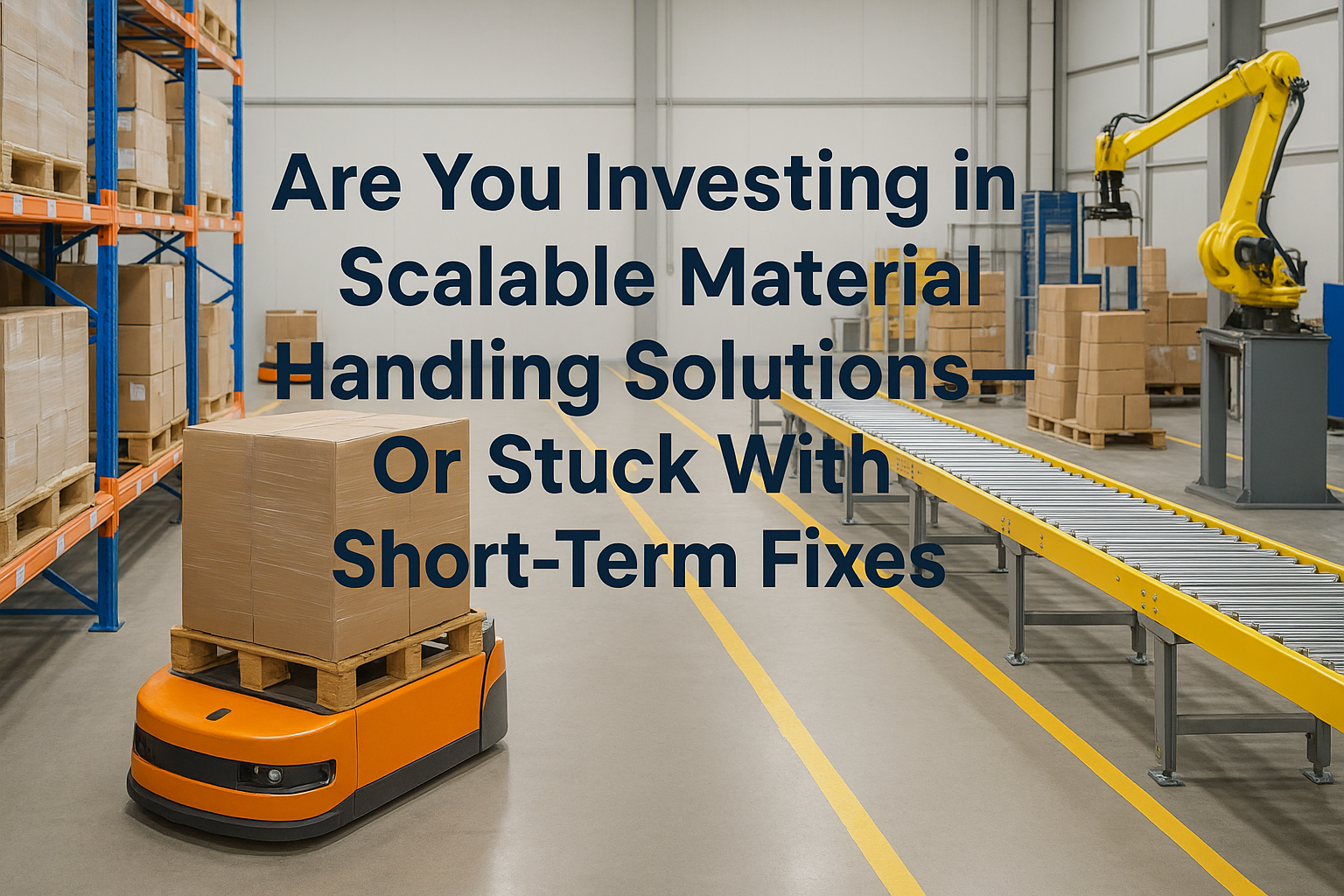

Warehouses, factories, and supply chain facilities need systems that can grow with demand. Many businesses start with quick, low-cost tools to solve immediate problems, like adding a small conveyor, hiring more workers, or rearranging shelves. But these temporary fixes don’t support long-term growth. As orders increase, workflows become inefficient, bottlenecks form, and labor struggles to keep up.
Modern operations need scalable solutions systems that adapt to higher volume, expand with new technology, and integrate with future automation. Automated conveyors, robotics, AGVs, pallet racking, and inventory tracking systems are examples of turnkey tools designed for long-term use. This article breaks down why scalability matters, the problems created by short-term fixes, and how smart planning can transform your entire workflow.
Why Scalability Matters in Material Handling
Facilities Grow, and Your System Must Keep Up
When demand increases, your equipment, layout, and workflow must be able to grow too. Scalable systems can expand without needing a full replacement.
Short-Term Solutions Break Down Under High Volume
Temporary setups work fine at first but become inefficient when orders spike. They quickly reach capacity limits.
Future Expansion Requires Flexible Equipment
Systems like modular conveyors and stackable pallet racks can expand easily when your operations scale.
Common Short-Term Fixes That Hurt Operations Later
Adding More Workers Instead of Improving Workflow
Hiring more people may temporarily boost output, but manual labor can’t match the speed or accuracy of automation.
Buying Single Machines That Don’t Integrate
A forklift, a labeler, or a conveyor may solve one problem—but without full system integration, it creates new bottlenecks.
Rearranging Storage Without a Real Plan
Moving shelves around without studying traffic flow leads to cluttered aisles and longer pick times.
Using Equipment Beyond Its Intended Capacity
Overloading racks, conveyors, or lifts causes safety risks and expensive repairs.
Signs Your Facility Is Stuck With Short-Term Fixes
Workers Frequently Wait for Equipment to Free Up
Bottlenecks mean the system can’t handle demand.
Inventory Is Hard to Track or Frequently Lost
This happens when storage isn’t organized or digital tools aren’t used.
Orders Take Longer to Process During Peak Times
Short-term fixes cannot scale during high-volume seasons.
Frequent Equipment Breakdowns
Overused or poorly integrated equipment wears out faster.
What Scalable Material Handling Solutions Look Like
Modular Conveyor Systems That Expand With Demand
These conveyors connect like building blocks. They let you add length, speed, or branches as needed.
Automated Guided Vehicles (AGVs) and Robots
AGVs replace manual transport, picking, and pallet moves. Robots speed up repetitive tasks with accuracy.
Adjustable Pallet Racking and Vertical Storage Systems
These systems grow upward instead of outward, reducing floor space issues.
Integrated Warehouse Management Systems (WMS)
A WMS tracks inventory, improves accuracy, and supports automation upgrades.
How Scalable Systems Boost Productivity
Smooth Traffic Flow Through Automated Transport
AGVs and conveyors reduce walking time and keep products moving smoothly.
Less Human Error in Picking and Packing
Digital tracking minimizes mistakes and keeps orders accurate.
Faster Order Processing During Peak Hours
Scalable systems maintain speed even when demand spikes.
Better Use of Space and Resources
Optimized layouts reduce clutter and open room for new equipment.
Role of Automation in Scalable Material Handling
Robotic Arms Speed Up Repetitive Tasks
Robots handle case packing, palletizing, and sorting with precision.
AGVs Create Autonomous Workflows
They move goods without human help, reducing labor strain.
Automated Storage and Retrieval Systems (AS/RS)
These systems bring items directly to workers or robots, cutting travel time.
Sensors and IoT for Real-Time Data
Sensors monitor movement, track inventory, and predict maintenance needs.
The Cost of Staying With Short-Term Fixes
Higher Labor Costs for Tasks Automation Could Handle
Manual labor becomes expensive in the long run.
More Frequent Repairs and Replacements
Cheap equipment breaks under pressure, costing more later.
Slow Order Fulfillment and Lost Customers
Delays hurt customer satisfaction and repeat business.
Limited Growth Capacity
A system that can’t scale becomes a barrier to expansion.
How to Build a Scalable Material Handling Plan
Analyze Current Workflow and Identify Bottlenecks
Start by mapping your entire process—from receiving to shipping.
Choose Equipment That Can Grow With Your Needs
Look for modular, stackable, or upgradeable systems.
Integrate Technology From the Start
A WMS, barcoding system, or automation software boosts long-term success.
Design a Layout That Supports Future Expansion
Make space for additional conveyors, racks, and robotics.
Solutions for Small and Medium-Sized Facilities
Start With Modular, Portable Systems
Small businesses can begin with scalable tools like portable conveyors.
Invest in Vertical Storage to Save Floor Space
Move upward instead of outward.
Use Basic Automation First
Barcode scanners, light-guided picking, and small robots improve efficiency without huge cost.
Plan for Future Add-Ons
Even small systems should support upgrades later.
Solutions for Large Facilities and Distribution Centers
Use Full Conveyor Networks With Sorting Capabilities
High-volume centers need complete integration.
Implement AGVs for Autonomous Movement
Robots handle repetitive, long-distance tasks more efficiently than staff.
Add High-Speed AS/RS Systems
These support massive inventory while keeping movement fast.
Integrate Real-Time Data Tracking for Every Movement
Digital dashboards help monitor performance across departments.
Why Turnkey Solutions Make Scaling Easier
Single-Source Planning Reduces Complexity
Turnkey material handling providers handle design, engineering, installation, and support.
All Equipment Works Together as One System
Integration prevents compatibility issues.
Faster Setup and Less Downtime
Turnkey systems are installed quickly and tested before use.
Long-Term Support Ensures Better Performance
Maintenance, upgrades, and training keep the system effective for years.
How Scalable Systems Improve Safety
Reducing Heavy Lifting With Automation
Robots and AGVs eliminate unsafe manual tasks.
Organized Layouts Prevent Accidents
Clear paths reduce collisions and clutter.
Safer Rack Designs With Certified Weight Limits
Strong pallet racks prevent collapses.
Predictive Maintenance Prevents Equipment Failure
IoT sensors warn you before breakdowns occur.
Avoiding Mistakes When Choosing Material Handling Solutions
Don’t Focus Only on Short-Term Needs
Think about where your business will be in 3–5 years.
Avoid Buying Tools That Don’t Integrate
Always choose equipment that works together.
Avoid Cheap Equipment With Limited Lifespan
Durability matters more than initial price.
Don’t Skip Staff Training
Even the best systems fail without proper knowledge.
How to Tell If a Solution Is Truly Scalable
It Supports Add-Ons or Upgrades
You can expand capacity without replacing the whole system.
It Integrates With Software and Automation Tools
A scalable system works with robotics, WMS, sensors, and conveyors.
It Maximizes Space Efficiently
Vertical storage, modular design, and clean layouts support growth.
It Handles Higher Volume Without Performance Loss
Speed and accuracy remain strong even during peak hours.
Conclusion
The difference between scalable material handling and short-term fixes can shape your entire business future. When you rely on temporary solutions—extra labor, scattered equipment, or improvised layouts—you limit your growth and risk inefficiency. But when you invest in scalable tools like modular conveyors, AGVs, robotics, vertical storage, and integrated management systems, your facility becomes faster, safer, and ready for long-term expansion.
Scalable solutions support higher volume, reduce errors, cut labor costs, and keep your operations competitive as demand changes. No matter the size of your facility, choosing flexible systems today protects your business tomorrow. When your material handling strategy is built for growth, every process—from receiving to shipping—runs smoother, faster, and stronger.
Curious for more? Dive deeper on our site now! News Well
