
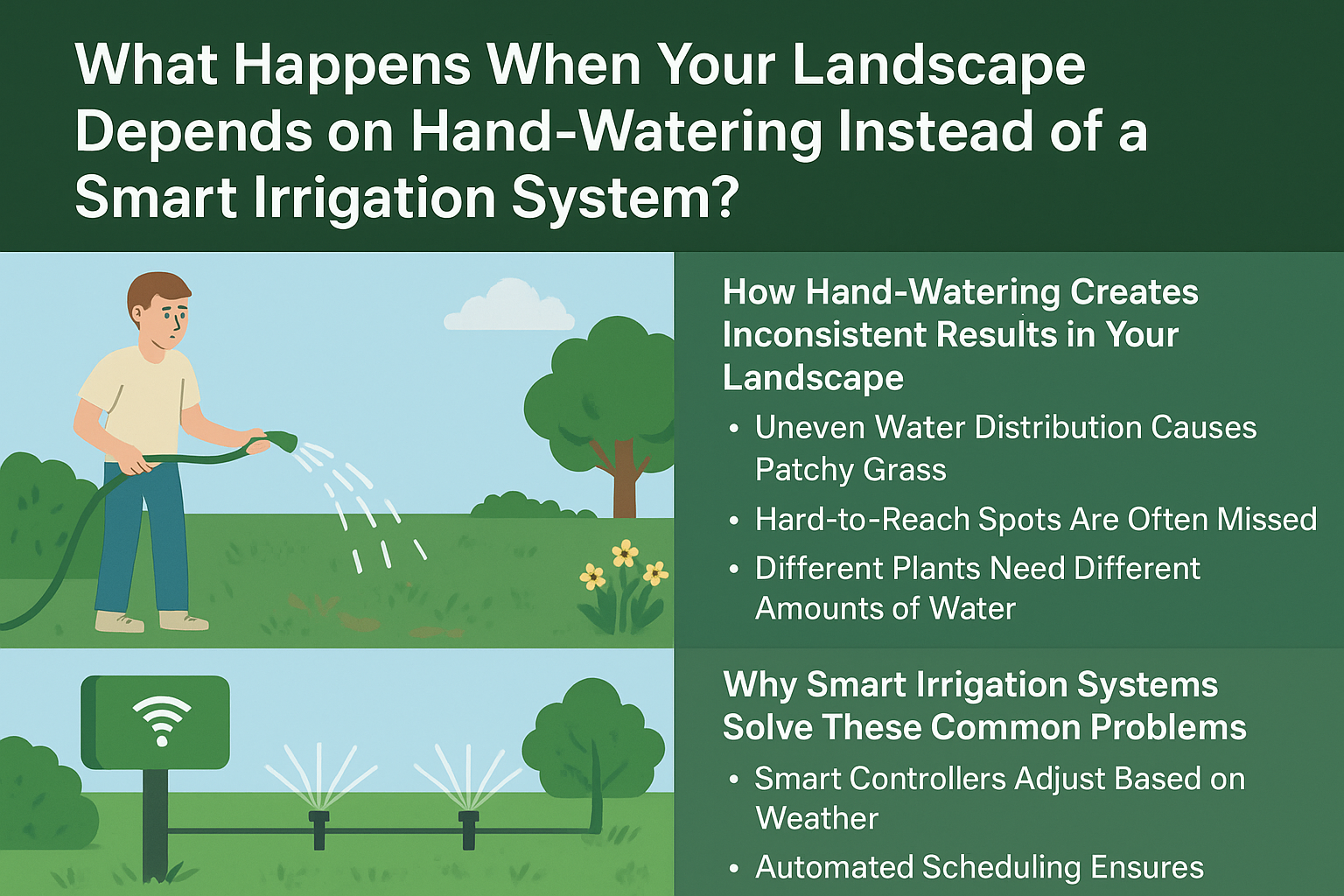

Keeping a landscape healthy takes more than just water it takes consistency, timing, and balance. Many homeowners still rely on hand-watering to care for their lawns, gardens, and flowerbeds. While this method may seem simple, it often leads to uneven watering, wasted time, and higher water bills. Hand-watering might feel hands-on, but it rarely delivers the accuracy and control that healthy landscapes need.
This is where smart irrigation systems make a major difference. These systems use timers, sensors, and weather data to give your landscape the exact amount of water it needs no more, no less. They save time, reduce stress, and help your lawn stay green all year long.
How Hand-Watering Creates Inconsistent Results in Your Landscape
Uneven Water Distribution Causes Patchy Grass
When watering by hand, some areas get too much water while others get too little. This happens because people naturally focus on certain spots more than others. The result is dry patches, soggy areas, and unhealthy lawn growth.
Hard-to-Reach Spots Are Often Missed
Corners, slopes, and far edges of the yard don’t get the same attention. Missing these spots leads to dry soil, weak grass, and plant stress.
Different Plants Need Different Amounts of Water
Shrubs, bushes, flowers, and lawns all have unique needs. Hand-watering rarely provides the right balance across the entire landscape.
Why Hand-Watering Wastes Time and Becomes Hard to Maintain
Busy Schedules Make Consistent Watering Difficult
People often forget to water, water too late in the day, or skip days altogether. Consistency matters for healthy landscapes, and hand-watering rarely delivers it.
Watering Takes Longer Than Most Expect
Dragging hoses, adjusting nozzles, and walking around the property can take 20–60 minutes each time. Over weeks and months, this becomes exhausting.
Travel or Busy Weeks Leave Lawns Dehydrated
When you’re away from home, the landscape suffers. Missed watering days dry out the grass and damage delicate plants.
The Hidden Costs of Hand-Watering Your Landscape
Higher Water Bills Due to Overwatering
Most people water longer than necessary. Excess water runs off into driveways, sidewalks, and gutters—raising utility bills without benefiting the landscape.
Wasted Water During Hot Midday Hours
When watering by hand, many people do it at the wrong time. Water evaporates faster in direct sunlight, meaning plants get less of the moisture they need.
Plant Damage From Inconsistent Moisture
Overwatering can drown roots. Underwatering dries them out. Both issues weaken grass and plants, making them more vulnerable to disease.
Environmental Impact of Manual Watering
More Water Waste During Drought Conditions
Hand-watering uses more water than needed, which becomes harmful during drought seasons.
Runoff Contributes to Soil Erosion
Too much water in one spot washes away topsoil, weakens plant roots, and harms flowerbeds.
Unnecessary Strain on Local Water Systems
Communities benefit when residents use water efficiently. Hand-watering often does the opposite.
Why Smart Irrigation Systems Solve These Common Problems
Smart Controllers Adjust Based on Weather
Smart irrigation uses real-time data from weather forecasts, rain sensors, and soil sensors. It reduces watering before storms, increases it during heat, and stops it during cold snaps.
Automated Scheduling Ensures Consistency
Your landscape receives water at the best times—usually early morning—without needing daily attention from you.
Water Is Delivered Evenly Across All Zones
Smart sprinkler systems divide your yard into zones. Each zone gets the right amount of water based on plant type, soil, and sunlight.
How Smart Irrigation Protects Your Lawn and Garden
Prevents Dry Spots and Overwatered Areas
The system measures how much water each zone needs, giving your landscape healthy, balanced moisture.
Promotes Deep Root Growth
Regular, controlled watering helps roots grow deeper, making lawns stronger and more drought-resistant.
Stops Plant Diseases Caused by Excess Moisture
Fungal diseases thrive in overly wet environments. Smart irrigation avoids heavy watering that causes issues like mold and root rot.
How Smart Irrigation Systems Save Water and Lower Costs
Uses Up to 50% Less Water Than Manual Watering
Because smart systems avoid runoff, evaporation, and overwatering, they use much less water.
Reduces Utility Bills Automatically
Smart adjustments ensure the system never wastes water, lowering monthly bills.
Maximizes Every Drop Through Precision Delivery
Water goes exactly where it’s needed—roots, not sidewalks.
The Convenience of Switching From Hand-Watering to Smart Irrigation
No More Dragging Hoses and Timers
A smart system handles everything for you. You don’t have to lift a hose again.
Remote Control From a Phone or Tablet
Modern systems connect to apps from your smartphone, giving you control from anywhere.
Perfect for Travelers, Busy Parents, and Elderly Homeowners
Your landscape stays healthy even when life gets hectic.
How Smart Systems Improve the Long-Term Health of Your Landscape
Plants Grow Stronger With Consistent Care
Steady watering makes grass greener, plants fuller, and gardens healthier.
Soil Quality Improves Over Time
Even moisture reduces compaction and helps beneficial nutrients reach roots.
Your Landscape Becomes More Resilient
Healthy lawns bounce back from heat waves, foot traffic, and seasonal changes faster.
Why DIY Watering Fails, Even With Good Intentions
People Can’t Match the Precision of Irrigation Technology
Timing, pressure, and distribution require precise coordination—something humans can’t replicate consistently.
Hand-Watering Can Harm Newly Planted Sod
Fresh sod needs uniform moisture. Smart irrigation prevents dry edges and dead strips.
Children or Teens Helping Often Miss Key Areas
Even when everyone helps, the job rarely gets done evenly.
When a Smart Irrigation System Becomes Essential
Large Yards or Complex Landscapes
Bigger landscapes are nearly impossible to water by hand.
Homes With Slopes or Drainage Issues
Smart systems adjust flow to prevent runoff.
Properties in Hot or Dry Climates
Controlled watering helps landscapes survive high heat.
Homes With High Water Bills
Smart irrigation reduces waste and lowers costs quickly.
The Simple Installation Process Explained
Experts Assess Your Property’s Needs
Professionals inspect soil type, plant variety, sunlight, and yard layout.
Zones Are Designed for Maximum Coverage
Each area is mapped for optimal water distribution.
Sprinkler Heads and Drip Lines Are Installed
Different plant types get the right kind of irrigation.
Smart Controller Is Connected and Programmed
The system is synced with weather data and seasonal adjustments.
Conclusion
When your landscape depends on hand-watering, it struggles to grow the way it should. Uneven watering, wasted time, high bills, and stressed plants are all common results. Manual watering feels simple, but it rarely provides the steady, balanced moisture that lawns, gardens, and flowerbeds need to stay healthy.
A smart irrigation system changes everything. It delivers consistent watering, saves water, lowers costs, prevents plant damage, and keeps your landscape looking fresh and vibrant. With automated schedules, weather-based adjustments, and precise zone control, your yard gets exactly what it needs—without the daily work.
When you switch to smart irrigation, your landscape becomes easier to manage, more efficient, and healthier year-round. It’s not just a convenience upgrade it’s a long-term investment in your home, garden, and peace of mind.
Curious for more? Dive deeper on our site now! News Well
