
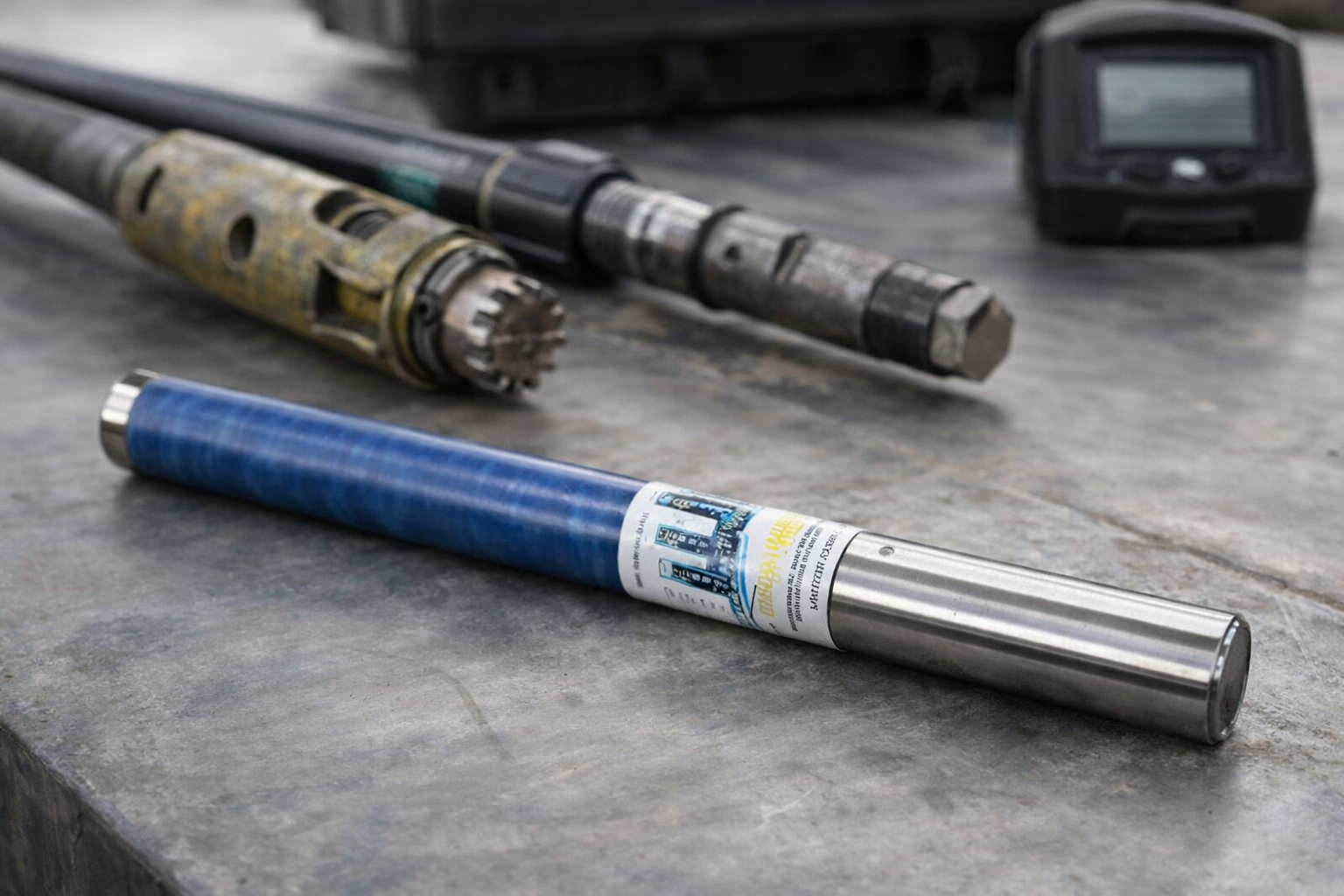

A refurbished DigiTrak transmitter should not be judged by a clean exterior or a low price. It should be judged by the test process behind it. In HDD work, the transmitter has one job: send usable data to the receiver so the crew can locate the head and understand what is happening downhole. If that data is weak, missing, or unstable, the job slows down and confidence drops.
That is why a proper test process has to do more than confirm that the unit powers on. The transmitter should be checked as a working part of a complete guidance system. It should be matched to the correct receiver and region. It should be inspected for wear in the places that affect sealing and power contact. It should be run with the correct battery. It should pair correctly, send the full data set the receiver is supposed to display, and calibrate in the housing it will actually run in. After that, it should be checked above ground for depth accuracy and stable performance.
This is the practical standard that separates a used transmitter from a properly tested refurbished one. The goal is simple. Before the unit goes back into service, it should prove that it can do the work it was built to do.
What a Refurbished DigiTrak Transmitter Must Prove Before It Is Ready
A DigiTrak transmitter has to prove more than basic electrical life. It has to prove that it can operate as a locating tool. That means stable power, correct system matching, usable telemetry, proper calibration, and dependable behavior in conditions that reflect real HDD use.
The first proof point is power. The transmitter should wake up and run on the correct battery for its model and power setting. Battery choice matters because some DigiTrak transmitters have specific battery requirements, and some operating modes place higher demands on the battery. A unit that behaves poorly with the wrong battery can look like a bad transmitter when the real problem is setup.
The second proof point is communication. The transmitter and receiver must match by model family, region, and selected frequency or band. On compatible systems, the unit should also be paired correctly. Then the receiver should display the data the transmitter is supposed to send, including pitch, roll, temperature, and battery status. Pressure-capable models add pressure data to that list.
The third proof point is accuracy. A proper test process includes calibration in the housing the transmitter will actually run in, because the housing affects signal behavior. After calibration, the unit should also be checked above ground at another measured distance. That step shows whether the system is doing more than turning on. It shows whether it is ready to guide a bore.
A working transmitter has to prove function, not just signal
This is where many loose claims fall apart. A transmitter can emit a signal and still fail in ways that matter on the job. It may drop roll or pitch data. It may show unstable readings. It may pair poorly, run on the wrong battery, or behave differently once it is placed in the housing. None of that is visible from a quick bench check.
A sound refurbishment process treats the transmitter as part of a system. It asks practical questions. Does the receiver recognize the unit correctly? Does the transmitter send the full data set the operator needs? Does it calibrate correctly? Does the reported depth hold up against a measured check? If it is a pressure transmitter, do the pressure-related features work as intended?
Those questions matter because HDD crews do not buy transmitters to admire them on a shelf. They buy them to steer, locate, and keep the job moving. A transmitter that passes a real test process gives the buyer something useful: confidence grounded in setup, inspection, and performance checks. That is the standard a refurbished unit should meet before anyone calls it ready.
Step 1: Confirm the Exact Model, Receiver Match, Frequency Family, and Region
The first step is identification. Before testing begins, the technician should confirm the exact DigiTrak transmitter model, the receiver platform it is meant to work with, the applicable frequency family or selected band, and the regional designation. That is not paperwork. It is part of the test.
DigiTrak systems depend on proper matching. The receiver and transmitter must share the correct regional designation, and the correct frequency or band must be selected. On systems that require pairing, the transmitter also has to be paired to the receiver before it can be evaluated fairly. If those basics are wrong, a healthy transmitter can look defective. The signal may not be recognized correctly. Data may appear incomplete. The unit may seem unstable when the real issue is a mismatch in setup.
This step also tells the technician how the rest of the process should be run. Once the model is known, the correct battery can be selected, the right housing can be used, and the right calibration process can be followed. That keeps the test grounded in the transmitter’s actual operating requirements instead of guesswork. For a refurbished transmitter, that matters because the buyer is trusting the seller’s process. A precise setup at the start gives meaning to every result that follows.
Why proper matching comes before every other test
Many locating problems begin with a mismatch, not a failed transmitter. The receiver may be set to the wrong band. The region may not match. The unit may not be paired. Those problems can waste time and produce the wrong conclusion about the transmitter itself.
That is why the first step should be strict. The transmitter should be tested as the exact model it is, not as a generic DigiTrak part. A careful technician should confirm the platform, the receiver match, the region, and the selected frequency or band before judging anything else. This protects the rest of the process. It also protects the buyer from vague claims that the unit was “tested” without saying how.
In practical terms, this first check creates a clean starting point. It removes avoidable errors and makes the later results credible. If the transmitter passes after being matched correctly, that pass means something. If it fails, the technician knows the failure is more likely to be real. That is the kind of discipline a refurbished HDD component should show before it goes back into service.
Step 2: Inspect the Body, Battery Cap, O-Ring, Threads, Fiberglass Tube, IR Area, and Pressure Ports
Once the model and setup are confirmed, the next step is a full physical inspection. A refurbished DigiTrak transmitter should be checked closely in the places that affect sealing, power contact, and durability. That includes the battery cap, the cap threads, the spring contact, the O-ring, and the fiberglass tube. On models with an IR port or pressure sensor ports, those areas also need attention.
The O-ring is a simple part, but it matters. If it is damaged, worn, or missing, water and contamination can get into the battery compartment. The cap threads and spring contact matter for the same reason. Dirt, oxidation, or thread damage can interfere with battery connection and cap fit. A transmitter may still appear to assemble correctly, but poor contact surfaces can create unstable power behavior later in the test.
The outside of the transmitter also deserves a hard look because HDD is hard on equipment. The fiberglass tube should be checked for wear and damage. The IR area should not be covered or obstructed. On pressure transmitters, the pressure sensor ports should be open and free of debris. These are not cosmetic details. They affect how the transmitter operates and how long it is likely to hold up in the field. A proper refurbishment process starts by finding those issues before moving on to electrical testing.
Physical inspection is part of performance testing
It is easy to treat inspection as a quick visual step, but for a transmitter it is part of performance testing. The cap, O-ring, threads, and contact surfaces all affect whether the unit can power and seal correctly. The fiberglass body affects durability. Pressure ports affect whether a pressure-capable model can do its extra job. If those points are ignored, later testing can give a false sense of security.
A careful inspection should answer clear questions. Does the cap seat properly? Are the threads clean and usable? Is the spring contact clean enough to carry power reliably? Is the O-ring still fit for service? Is the body free from damage that could shorten its life? If the model uses pressure sensing, are the ports open and clean?
This is where a refurbished transmitter begins to separate itself from an ordinary used unit. A used unit may simply be wiped down. A properly refurbished one should be checked with purpose. The point is not to make the unit look better. The point is to catch physical conditions that can undermine the electrical and functional checks that come next.
Step 3: Clean the Contact Points and Install the Correct Battery for the Model
After inspection, the transmitter should be cleaned where power transfer happens. The spring, the battery-cap threads, and the battery compartment contact areas should be cleaned so the unit can make solid electrical contact. This step matters because oxidation and residue can interrupt power even when the transmitter looks assembled correctly from the outside.
The battery must also be correct for the model. DigiTrak documentation makes clear that approved battery types vary by transmitter family and that battery choice affects performance. On Falcon V2 transmitters, for example, certain battery types are recommended for certain sizes and power modes, and alkaline batteries are not recommended for high-power operation. The same guidance notes that current-draw warnings can point to weak batteries, the wrong battery in high-power mode, or an incompatible housing. That makes battery selection part of the test itself, not just a convenience.
Once the correct battery is installed, the transmitter should be observed for normal power behavior. It should wake as expected, remain stable, and show no obvious signs of weak current draw or poor connection. If the unit behaves inconsistently at this stage, the problem should be addressed before moving on to pairing or calibration. A refurbished transmitter should be tested under the conditions it is designed to run in, and that starts with the right battery and clean power contact surfaces.
Why power stability deserves its own test step
Power problems can hide in plain sight. A transmitter may wake up and still behave badly a few minutes later, or it may show trouble only under a higher power setting. That is why the test should look for stable power behavior, not just a successful startup.
The technician should watch for consistent wake and run behavior. On models with selectable power levels, those modes should be considered during testing. A unit that works in one mode but struggles in another may still have a power-related problem. The same is true if the transmitter shows warning behavior that points to weak current draw or an unsuitable battery setup.
For the buyer, this step answers a basic question: was the unit tested with the right battery and proper contact surfaces, or was it simply powered any way possible? The difference matters. A proper refurbishment process uses correct battery selection and contact cleanup as part of the proof that the transmitter is ready for deeper testing. That is ordinary work, but in HDD equipment ordinary work done well is what creates reliability.
Step 4: Pair the Transmitter to the Receiver and Verify Pitch, Roll, Temperature, Battery, and Pressure Data
With stable power in place, the transmitter should be paired to a known-good receiver when the system requires pairing. Then the receiver should be checked to make sure it recognizes the transmitter correctly and displays the expected telemetry. For DigiTrak systems, that means more than simple signal presence. The receiver should show pitch, roll, temperature, and battery status. On pressure-capable models, it should also display pressure data.
This step is essential because partial communication is not enough in the field. A transmitter that sends a signal but fails to deliver roll or pitch data is not ready to guide a bore. DigiTrak troubleshooting guidance for missing roll and pitch shows how issues in battery condition, frequency selection, pairing, or calibration can interrupt the data the operator needs. That is why a refurbished transmitter should be checked for the full working data set, not just for a detectable signal.
The test should also verify that the data behaves normally as the transmitter is repositioned. Pitch and roll should update in a believable way. Temperature and battery information should display as expected. If the model is pressure-capable, pressure-related output should also be confirmed. This step shows whether the transmitter and receiver are functioning as a system. For a refurbished unit, that is the only standard that matters.
Full telemetry matters more than a simple “signal present” check
A quick signal check is easy, but it does not tell the whole story. The operator depends on more than the presence of a transmitter. The receiver must decode the data that makes locating possible. That includes the transmitter’s orientation, temperature, and battery state. On pressure models, it also includes drilling-fluid pressure.
This is where a real test process earns its keep. The technician should confirm that the transmitter is not just visible to the receiver but is communicating complete, usable information. If roll or pitch data is missing, if temperature does not display properly, or if a pressure model fails to report pressure data, the transmitter should not be cleared as ready.
For buyers, this step makes the difference between a reassuring claim and a meaningful one. “Signal present” says very little. “Paired and verified for full telemetry” says far more. It tells the customer the transmitter was tested for real HDD use, where the value of the unit lies in the data it sends, not just in the fact that it turns on.
Step 5: Calibrate the Transmitter in the Housing and Run an Above-Ground Depth Check
Calibration should be done with the transmitter in the housing it will actually run in. DigiTrak guidance is clear on that point: the housing affects signal strength and therefore affects the accuracy of the system. A loose bench setup can be useful for basic checks, but it is not enough for a final performance test.
Calibration is also not a one-time assumption. DigiTrak guidance says calibration is required before first use and when the transmitter, receiver, drill head or housing, or optimized band changes. That makes calibration a core part of any refurbishment process. The transmitter should be calibrated in the correct setup, under controlled conditions, before anyone decides it is ready for field work.
After calibration, the process should not stop. DigiTrak guidance also recommends checking the depth reading again at another distance after calibration. For Falcon F2 systems, the manual states that above-ground depth readings should be within plus or minus 5 percent of measured distance when the transmitter is level. That provides a clear benchmark for a practical accuracy check. A refurbished transmitter that passes calibration and a measured above-ground depth check has done more than power on. It has shown that it can perform as part of a locating system.
Why calibration in the correct housing changes the result
The housing is not a neutral container. It affects how the transmitter behaves, which is why calibration should be done with the transmitter installed in the housing it will use in the field. If that step is skipped or done in the wrong setup, the accuracy check that follows may not reflect real operating conditions.
That is also why a second measured check matters. Calibration tells the system how to behave. The depth check shows whether that behavior holds up. When the transmitter is level and placed at a known distance, the receiver’s reported depth can be compared to the measured distance. On Falcon F2, the manual gives a clear tolerance of plus or minus 5 percent for that above-ground reading.
For a refurbished transmitter, this step is one of the strongest signs of serious testing. It moves the process beyond startup and communication into actual locating performance. Buyers understand that difference. They know a transmitter is valuable only if it helps them locate with confidence. Calibration in the proper housing, followed by a measured depth check, is how that confidence is earned.
Step 6: Verify Signal Stability, Interference Response, Temperature Warnings, Pressure Functions, and Record the Results
The last stage of testing looks at how the transmitter behaves once the basic checks are complete. A transmitter may power correctly, pair correctly, and calibrate correctly, yet still show unstable behavior when conditions change. That is why signal stability deserves a final check. DigiTrak guidance on calibration says signal strength should be what you expect and should not fluctuate. The same guidance recommends calibrating both selected bands. Practical HDD guidance also recommends checking several roll positions during an above-ground interference test to make sure pitch and roll are not being affected.
Temperature behavior belongs in this final stage as well. DigiTrak receivers are designed to display transmitter temperature, and the F5 manual describes warning tones that change as transmitter temperature rises. That means a refurbished transmitter should not only send temperature data but should also behave normally as the receiver monitors that data.
Pressure-capable models need one more check. The pressure sensor ports should be open and clean, and the receiver should show pressure data, not just standard locating data. Once those steps are complete, the results should be documented by model, band, housing, battery, and pass or fail status. DigiTrak does not publish a public refurb checklist, but its guidance makes clear that performance depends on the exact system configuration. A credible refurbishment process should record that configuration and the outcome of each test.
A finished test should leave a clear record behind
The final record matters because it turns a vague claim into a specific one. Instead of saying a transmitter was “tested,” the seller can show what was actually checked: model match, battery setup, physical inspection, telemetry verification, calibration, depth check, signal stability, and any pressure-related functions.
That record also reflects a basic truth about DigiTrak systems. Performance depends on the exact combination of transmitter, receiver, selected band, battery, and housing. If those details are not tracked, the word tested loses value. If they are tracked, the test becomes easier to trust.
For contractors and equipment owners, that clarity is useful. It tells them the transmitter was evaluated as a working HDD component, not merely as a powered electronic item. In a field where downtime costs money and uncertainty slows crews down, a clear record of a step-by-step test process has real value. It is simple, practical, and honest. That is what a refurbished DigiTrak transmitter should offer before it goes back into service.
