
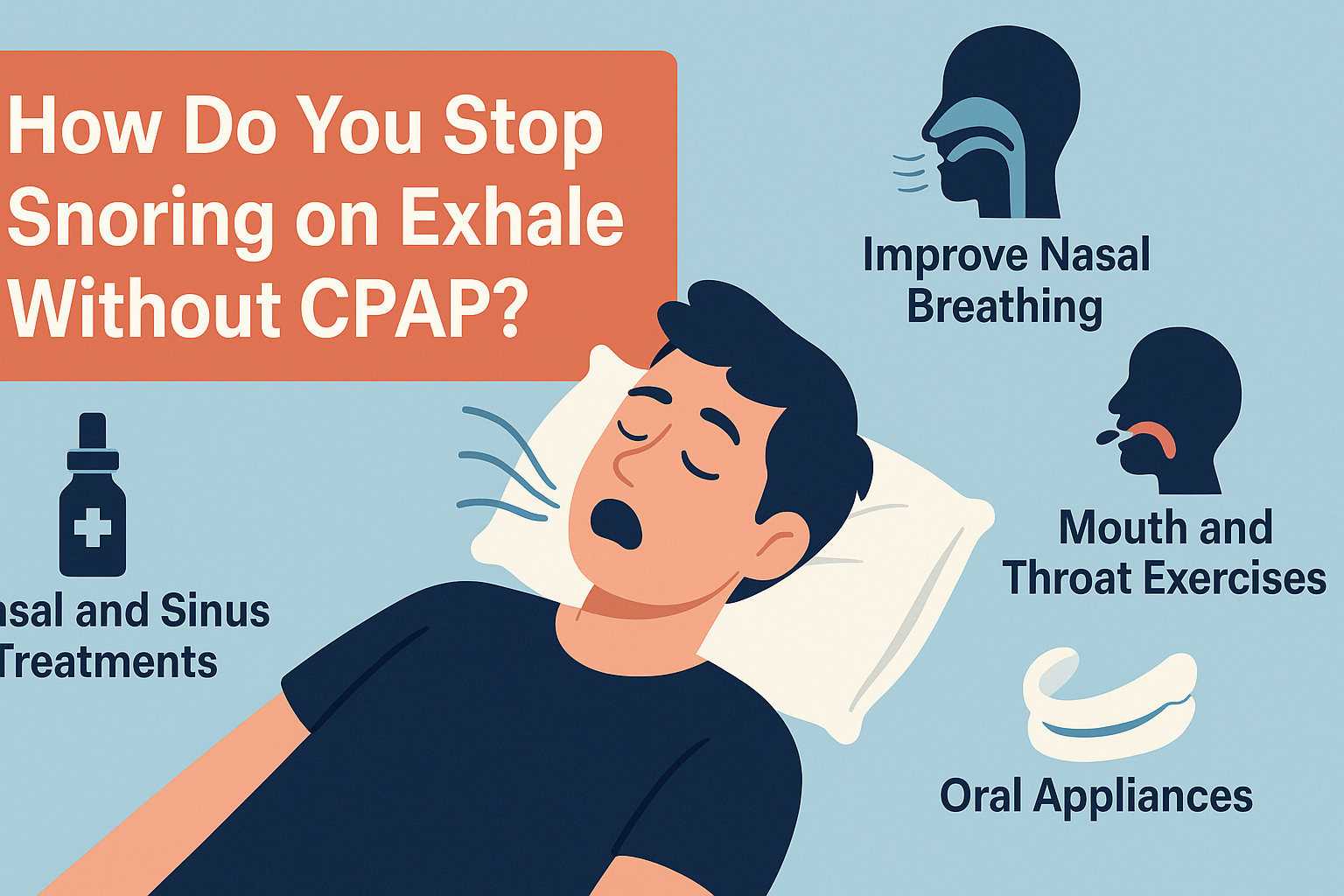

Snoring can be embarrassing, frustrating, and sometimes even alarming especially when it happens while you’re breathing out. Many people think snoring only happens on the inhale, but snoring on exhale is more common than you might expect. It can affect sleep quality, relationships, and even your long-term health.
For some, snoring on exhale is a mild nuisance. For others, it may be a sign of something more serious, like sleep apnea or airway blockage. While CPAP (Continuous Positive Airway Pressure) machines are a standard treatment for snoring and sleep apnea, not everyone wants or needs to use one.
The good news? There are plenty of natural and medical options that can help you breathe easier and sleep better without relying on a machine. Let’s explore why snoring on exhale happens, what it means, and how you can stop it naturally and safely.
Understanding Snoring on Exhale
What Causes Snoring When You Breathe Out
Snoring occurs when air passes through partially blocked airways, causing tissues in the throat, nose, or mouth to vibrate. During exhalation, this vibration can intensify if the airflow meets resistance due to narrowed passages or relaxed muscles.
When you exhale, air is pushed outward through your throat and nasal passages. If those pathways are swollen, blocked, or weak, the outgoing air can cause the soft palate, uvula, or nasal tissue to flap and make sound.
In simpler terms: your airways act like a reed in a musical instrument—when air moves through a tight space, it produces vibration and noise.
Common Reasons You Might Snore on Exhale
- Nasal congestion or sinus blockage (from allergies, colds, or structural issues)
- Deviated septum, which restricts airflow through one side of the nose
- Weak throat muscles or soft palate collapse during sleep
- Mouth breathing instead of nasal breathing
- Weight gain leading to pressure on the neck and airways
- Alcohol or sedative use that relaxes throat muscles too much
- Sleep position, especially lying flat on the back
Identifying which of these factors applies to you is the first step toward fixing the problem.
Why Snoring on Exhale Shouldn’t Be Ignored
Impact on Sleep and Health
While occasional snoring may not seem serious, chronic exhalation snoring can disrupt your sleep cycle and reduce oxygen levels in the body. Over time, this can cause:
- Daytime fatigue and poor concentration
- Mood swings and irritability
- Increased blood pressure
- Higher risk of cardiovascular problems
It can also disturb your partner’s sleep, leading to what experts call “spousal arousal syndrome,” where both people experience sleep deprivation.
Could It Be Sleep Apnea?
In some cases, snoring on exhale is a sign of obstructive sleep apnea (OSA), a condition where the airway collapses completely during sleep. People with OSA often stop breathing for short periods and gasp for air.
If you snore loudly, wake up tired, or your partner notices pauses in your breathing, it’s important to talk to a sleep specialist. A sleep study (polysomnography) can determine whether your snoring is linked to apnea.
Natural Solutions to Stop Snoring on Exhale
Improve Nasal Breathing
A blocked or stuffy nose is one of the main culprits behind snoring on exhale. When nasal airflow is limited, your body compensates by forcing air through the mouth, creating turbulence.
Try these steps:
- Use a saline nasal rinse or neti pot to flush out mucus and allergens.
- Apply a nasal decongestant spray before bed if congestion is severe (short-term use only).
- Use nasal strips or dilators to open the nostrils and improve airflow.
- Keep bedroom air moist with a humidifier to prevent dryness and inflammation.
Practice Mouth and Throat Exercises
Strengthening the muscles in your mouth, tongue, and throat helps keep airways open during sleep. Myofunctional therapy—a series of simple exercises—has been shown to reduce snoring significantly.
Examples include:
- Tongue slide: Press your tongue against the roof of your mouth and slide it backward.
- Vowel sounds: Say “A-E-I-O-U” slowly and forcefully several times a day.
- Cheek push: Push your tongue against one side of your cheek, then the other.
- Singing exercises: Singing can strengthen the throat muscles that help control snoring.
These exercises may sound simple, but studies show that doing them daily can reduce snoring frequency by up to 40–60%.
Change Your Sleep Position
Sleeping on your back allows gravity to pull the soft tissues in your throat downward, narrowing your airway. Switching positions can make a big difference.
Tips:
- Sleep on your side using a body pillow for support.
- Try a positional therapy device or even sew a tennis ball into the back of your pajama top to discourage back-sleeping.
- Slightly elevate your head with an adjustable pillow or wedge to open your airway.
Manage Weight and Lifestyle Factors
Carrying extra weight around your neck and chest can compress your airways. Even modest weight loss can reduce snoring intensity.
Lifestyle adjustments:
- Avoid alcohol and sedatives 3–4 hours before bed.
- Quit smoking, which inflames the throat and nasal passages.
- Maintain a consistent sleep schedule to support muscle tone and breathing rhythm.
Stay Hydrated
Dry mouth and throat tissues vibrate more easily. Drink plenty of water during the day and avoid excessive caffeine or alcohol, which dehydrate the body.
Medical Options to Reduce Snoring Without CPAP
Oral Appliances (Mouthpieces)
If lifestyle changes don’t help enough, you may benefit from an oral appliance. These are custom-fitted devices worn in the mouth during sleep.
They work by gently repositioning the lower jaw and tongue to keep the airway open. Dentists trained in sleep medicine can fit these comfortably. Unlike CPAP, they’re small, quiet, and easy to travel with.
Nasal and Sinus Treatments
If you have chronic nasal blockage or structural issues, medical interventions can help:
- Septoplasty: Surgery to correct a deviated septum, improving airflow.
- Turbinate reduction: Reduces swollen nasal tissues that block breathing.
- Balloon sinuplasty: Opens sinus pathways using a small balloon device.
These procedures are minimally invasive and can dramatically improve breathing through the nose, reducing both inhale and exhale snoring.
Throat and Palate Procedures
Some people snore because of excess tissue in the soft palate or uvula. ENT specialists may recommend:
- Laser-assisted uvulopalatoplasty (LAUP) to trim soft palate tissue.
- Radiofrequency ablation (RFA) to tighten throat muscles.
- Palatal implants that stiffen tissues to reduce vibration.
These options are considered only when conservative treatments don’t work.
Allergy and Asthma Management
Chronic allergies can cause constant nasal swelling, forcing mouth breathing during sleep. An allergist can test for triggers like dust mites, pollen, or pet dander.
Common treatments include:
- Antihistamines and nasal corticosteroids
- Allergy shots (immunotherapy) for long-term relief
- Environmental control, such as using HEPA filters and washing bedding weekly
Breathing and Relaxation Techniques
Diaphragmatic Breathing
Learning to breathe from your diaphragm instead of your chest can strengthen respiratory muscles and reduce airway collapse.
To practice:
- Lie down and place one hand on your chest and one on your belly.
- Inhale through your nose so your belly rises while your chest stays still.
- Exhale slowly through pursed lips.
- Repeat for 5–10 minutes daily.
Nasal Breathing Training
Try Buteyko breathing or alternate nostril breathing, both of which teach the body to maintain steady airflow through the nose, reducing vibration on exhale.
Mind-Body Practices
Stress can tighten muscles and trigger shallow breathing. Techniques such as yoga, meditation, and progressive muscle relaxation help calm your body and stabilize breathing patterns before sleep.
When to Seek Professional Help
Signs You May Need Medical Evaluation
- Loud, chronic snoring that disrupts others
- Gasping, choking, or pauses in breathing during sleep
- Morning headaches or sore throat
- Excessive daytime fatigue
- Waking up feeling short of breath
If you experience these symptoms, see an ENT specialist or sleep doctor. They may recommend a sleep study to check for apnea or other airway issues.
The Role of a Sleep Study
A polysomnography test measures oxygen levels, breathing rate, and snoring patterns. If results show mild airway resistance or upper airway resistance syndrome (UARS), you may only need minor interventions—not a CPAP machine.
Combining Natural and Medical Strategies
The most successful snoring treatment plans use both lifestyle changes and medical support. For example:
- A patient with nasal blockage might use saline rinses and get a turbinate reduction.
- Someone with weak throat muscles could do daily myofunctional exercises along with an oral appliance.
- Weight loss, posture improvement, and better sleep hygiene can amplify medical results.
This comprehensive approach targets the root causes rather than masking symptoms.
Preventing Snoring From Coming Back
Once you’ve found what works, consistency is key. Here’s how to keep your airway healthy long-term:
- Maintain a healthy weight and exercise regularly.
- Sleep on your side or use supportive pillows.
- Treat nasal allergies promptly to prevent congestion.
- Stay hydrated and avoid late-night alcohol.
- Keep regular sleep hours to stabilize breathing rhythm.
If your snoring returns despite these efforts, revisit your doctor for a re-evaluation—your body and airway anatomy can change over time.
Conclusion
Snoring on exhale might seem harmless, but it’s often your body’s way of signaling that something isn’t working right. Whether it’s nasal congestion, weak throat muscles, or poor sleep habits, there are effective ways to fix it—without relying on a CPAP machine.
By combining natural remedies, like breathing exercises and lifestyle changes, with medical options, such as oral appliances or nasal treatments, you can take control of your sleep health. The goal isn’t just to stop the noise—it’s to improve oxygen flow, restore restful sleep, and protect your long-term well-being.
Your nights can be quiet again, your mornings refreshed, and your body restored. The path to peaceful sleep starts with understanding your breathing—and taking small steps toward lasting change.
Curious for more? Dive deeper on our site now! News Well
