
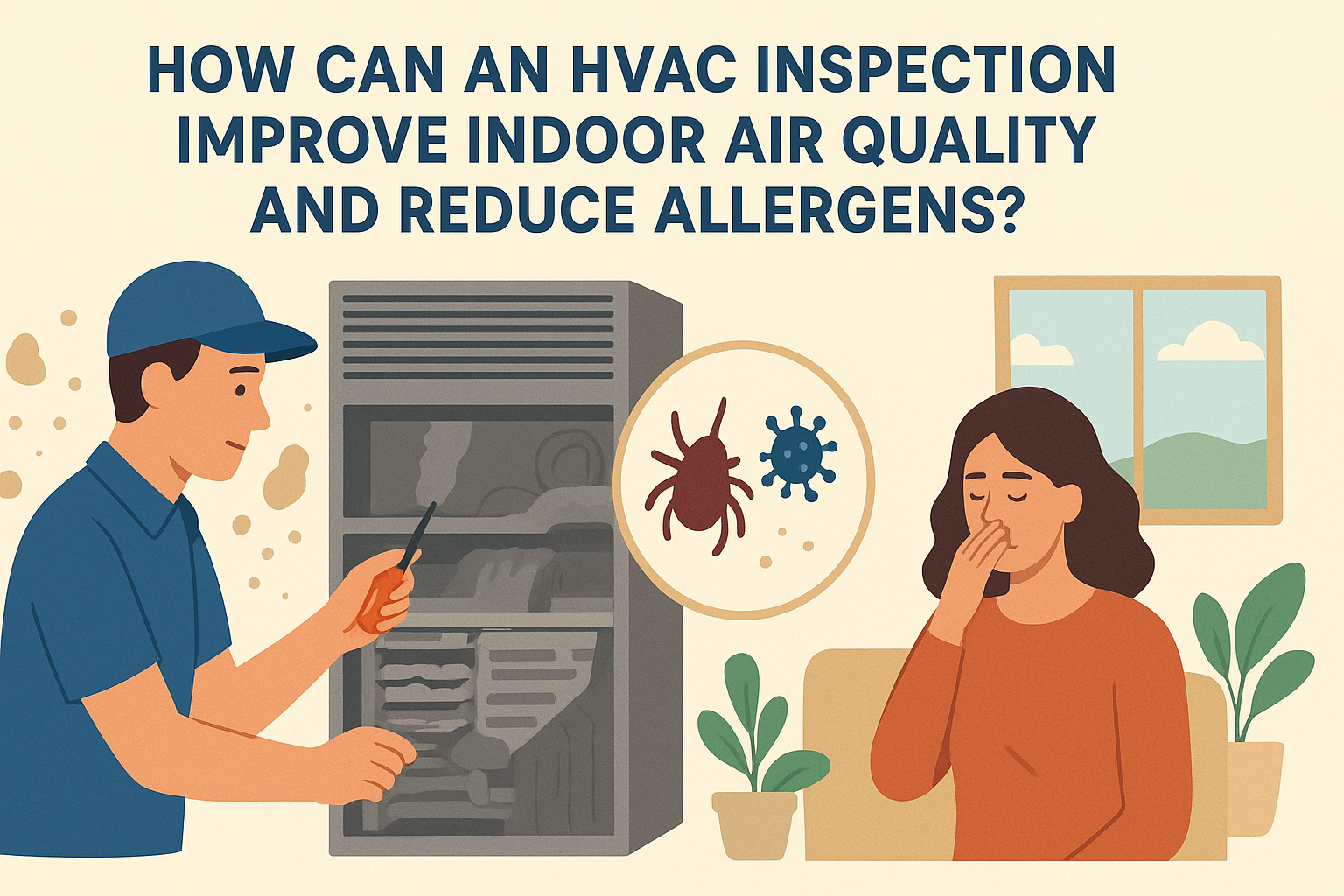

Most people think of their HVAC system as something that keeps their home warm in winter and cool in summer. But it does much more than that — it also plays a huge role in the quality of the air you breathe indoors. Over time, dust, allergens, mold, and other contaminants can build up inside your heating and cooling system. Without regular HVAC inspections, these particles can circulate through your home and affect your health and comfort.
A professional HVAC inspection doesn’t just check for heating or cooling issues — it also helps improve indoor air quality (IAQ), control allergens, and create a cleaner, healthier living space. Let’s look at how this simple service can make a big difference in your home’s air and overall well-being.
Understanding the Connection Between HVAC and Indoor Air
Why HVAC Systems Affect Air Quality
Your HVAC system constantly moves air throughout your home, pulling it in through return vents, filtering it, and pushing it back out through supply ducts. If dust, pollen, or pet dander collect inside, those particles are circulated again and again.
That’s why clean filters and well-maintained equipment are essential. When the system is clogged or dirty, it spreads allergens instead of removing them.
The Role of Air Filters and Ductwork
Air filters are your HVAC’s first line of defense. But even high-efficiency filters can’t work properly if they’re old or blocked. The ductwork that carries air can also gather layers of dust and bacteria, which reduce system efficiency and increase airborne irritants.
A professional HVAC inspection makes sure every component — from filters to ducts — is clean and working properly to keep your indoor air fresh and safe.
Common Air Quality Problems an HVAC Inspection Can Uncover
Dust, Dirt, and Debris Buildup
One of the most common problems inspectors find is heavy dust inside vents and coils. This buildup can restrict airflow and reduce the efficiency of the blower motor, making your system work harder while recirculating dirty air.
Mold and Moisture Issues
When condensation forms in air handlers, drip pans, or ductwork, it creates the perfect environment for mold to grow. Mold spores then spread through your home’s air supply, triggering allergies and respiratory irritation.
A trained technician checks for moisture and signs of biological growth during the inspection. If found, they’ll clean or disinfect the affected areas and may suggest a dehumidifier to control future buildup.
Poor Ventilation
If some rooms in your house feel stuffy or have lingering odors, poor ventilation may be the cause. During an inspection, the technician measures airflow and checks vent placement, ensuring every room gets enough fresh air.
Proper ventilation not only improves comfort but also helps remove volatile organic compounds (VOCs) and other indoor pollutants.
How HVAC Inspections Help Reduce Allergens
Removing Trapped Pollutants
During a professional HVAC inspection, technicians remove and clean filters, vents, and coils that trap pollen, dust mites, pet dander, and other microscopic allergens.
By cleaning these areas and improving airflow, the inspection reduces the number of particles circulating in the home — helping families with asthma or seasonal allergies breathe easier.
Detecting Hidden Mold or Mildew
Allergens aren’t just in the air; they often hide in damp spots inside your HVAC system. Mold growth releases spores that can trigger coughing, sneezing, or itchy eyes. Inspectors look for dark spots, musty smells, or water leaks that could signal mold problems.
Once found, the system can be disinfected and sealed to prevent the issue from returning.
Balancing Humidity Levels
Humidity plays a major role in indoor air quality. Air that’s too humid encourages mold growth and dust mites, while air that’s too dry causes irritation and sore throats.
A comprehensive HVAC inspection ensures that the humidifier, dehumidifier, and ventilation settings are correctly balanced for comfort and health.
The Step-by-Step Process of a Professional HVAC Inspection
Step 1: Checking the Air Filters and Ducts
Technicians start by removing and inspecting air filters. If filters are dirty or clogged, they’re replaced to ensure clean airflow. Then, the ductwork is examined for dust, leaks, or buildup. Leaky ducts can pull in contaminants from crawl spaces or attics.
Step 2: Examining the Coils and Blower Components
The evaporator coils and blower assembly are cleaned to remove dirt that can block airflow and spread allergens. Clean coils also help your system run more efficiently, using less energy to cool or heat the air.
Step 3: Testing Airflow and Pressure
Special tools are used to measure airflow and pressure levels throughout the system. If certain rooms aren’t getting proper ventilation, adjustments are made to rebalance the system.
Step 4: Inspecting Drain Lines and Moisture Levels
Technicians check drain lines, pans, and connections for moisture or standing water. They may recommend cleaning or adding insulation to prevent condensation that could lead to mold.
Step 5: Recommending Preventive Maintenance
Finally, they provide a detailed report and suggest maintenance tasks — such as regular filter changes or duct cleanings — to help keep your air clean all year long.
The Hidden Health Benefits of Regular HVAC Inspections
Reducing Allergy and Asthma Symptoms
By eliminating airborne particles and controlling humidity, HVAC inspections help reduce allergy triggers. Cleaner air means fewer sneezing fits, headaches, and sinus issues.
Families with children, seniors, or individuals with asthma often notice fewer flare-ups after an inspection and cleaning.
Preventing Respiratory Issues
Poor indoor air can lead to chronic coughing, sore throats, or fatigue. A clean HVAC system ensures that you’re breathing healthy air without harmful particles or fumes.
Creating a Healthier Home Environment
Clean air benefits everyone — even pets. Regular HVAC inspections create a comfortable, balanced environment where everyone can breathe easier and sleep better.
Energy Efficiency and Air Quality Go Hand-in-Hand
Why Clean Systems Use Less Energy
When your HVAC system is clean, it doesn’t have to work as hard to push air through your ducts. That means lower energy bills and less wear and tear on your equipment.
Reducing Carbon Footprint
A properly maintained HVAC system also helps reduce your home’s carbon footprint. Cleaner filters, balanced airflow, and efficient fans use less electricity and produce fewer emissions — a win for both your wallet and the planet.
Preventing Air Quality Problems Before They Start
Schedule Seasonal Inspections
The best time for an HVAC inspection is before summer or winter, when systems work hardest. Seasonal checkups catch small issues — like dirty coils or leaks — before they turn into major repairs.
Change Filters Regularly
Swap out filters every one to three months, depending on usage and environment. If you have pets or live in a dusty area, check them more often.
Keep Vents Clear and Clean
Avoid blocking vents with furniture or drapes, and vacuum around them regularly to prevent dust buildup.
Monitor Humidity Levels
A smart thermostat or humidity sensor can help you keep indoor moisture levels between 30% and 50%, preventing both dryness and mold growth.
Conclusion
A professional HVAC inspection does more than just keep your system running — it protects your health and the quality of the air inside your home. By cleaning filters, checking ducts, and balancing humidity, technicians remove hidden allergens and improve airflow.
With regular inspections, you’ll enjoy cleaner air, fewer allergies, and a more efficient HVAC system that saves money and energy. In short, a small step in maintenance leads to a big improvement in comfort, health, and peace of mind.
Curious for more? Dive deeper on our site now! News Well
