
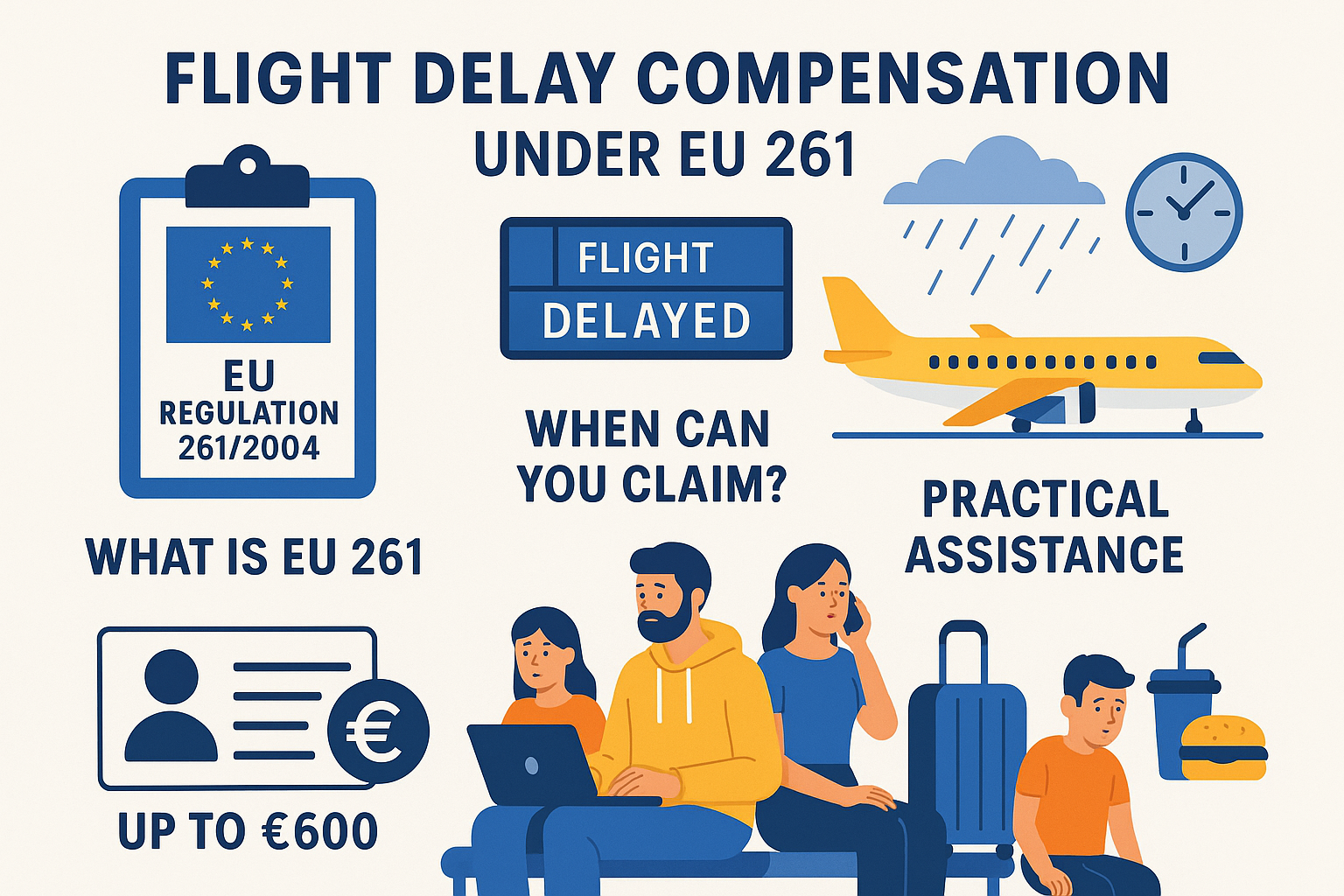

Travelling, whether for leisure, family breaks, or business, means we all hope for smooth skies. But when a flight suffers a lengthy delay, frustration quickly replaces excitement. Fortunately, under Europe’s landmark Regulation (EC) No 261/2004 (commonly “EU 261”), passengers have a clear right to Flight Delay Compensation when their journey is disrupted. This framework ensures travellers are not left helpless when airline operations fall short.
What is EU 261, and who does it protect?
EU 261 came into force in 2005 to establish common rules for compensation and assistance for air travellers in situations such as denied boarding, cancellations, and long delays. If your flight departs from an EU airport or arrives within the EU on an EU-based carrier, you may be covered under this regulation. It protects a wide range of passengers, including holidaymakers, families, business travellers, and occasional flyers.
When can you claim Flight Delay Compensation?
A delay is eligible for compensation if you arrive at your final destination three hours or more later than the planned arrival time, and if the reason for the delay is within the airline’s control. Operational issues such as technical problems typically qualify, while “extraordinary circumstances”, including severe weather, airport closures, or air-traffic control strikes, do not. The regulation considers the distance travelled, and this affects the compensation amount.
What sort of compensation amounts are we talking about?
Under EU 261, the standard amounts are:
- Up to €250 for short flights (up to ~1,500 km)
- Up to €400 for medium-distance flights (within Europe over 1,500 km, or non-EU short-haul)
- Up to €600 for long-haul journeys (3,500 km or more)
These amounts apply when the delay threshold is met and the airline is deemed responsible.
Beyond money: the rights you already have
Even before compensation is considered, EU 261 guarantees practical assistance for impacted passengers. If your flight is significantly delayed, you are entitled to meals and refreshments, communication support such as calls or internet access, when needed, and hotel accommodation. For many travellers, like families stranded during a holiday connection, these protections can make lengthy waits more manageable and less stressful.
How to claim your right to compensation
If you believe your flight qualifies, the following steps can help streamline the process:
- Check eligibility: Ensure the route, length of delay (3+ hours), and cause meet EU 261 requirements.
- Gather documents: Keep your booking confirmation, boarding pass, emails or messages from the airline, and receipts for additional expenses.
- Submit your claim: Contact the operating carrier with your details and reference EU 261.
- Be aware of deadlines: Limitation periods vary by country, so filing sooner is always better.
How Lennuabi Helps You Claim Compensation
For travellers who find the claims process confusing or time-consuming, Lennuabi provides a straightforward solution. With just a few minutes of information submitted, Lennuabi takes over the communication with the airline, managing paperwork, legal handling, follow-ups, and negotiation. Their service is risk-free, meaning you only pay if your claim is successful. This makes asserting your rights easier, especially if you prefer not to deal directly with the airline.
Why this matters for all kinds of flyers
Whether you fly regularly for business or take an occasional family holiday, delays can disrupt plans and cause stress. EU 261 helps ensure a delayed flight does not automatically become a wasted trip. With guaranteed protections and services like Lennuabi to help enforce them, travellers are better equipped when schedules go off-track. The next time a journey is unexpectedly held up, remember: you’re not just waiting, you’re protected.
Curious for more? Dive deeper on our site now! News Well
