
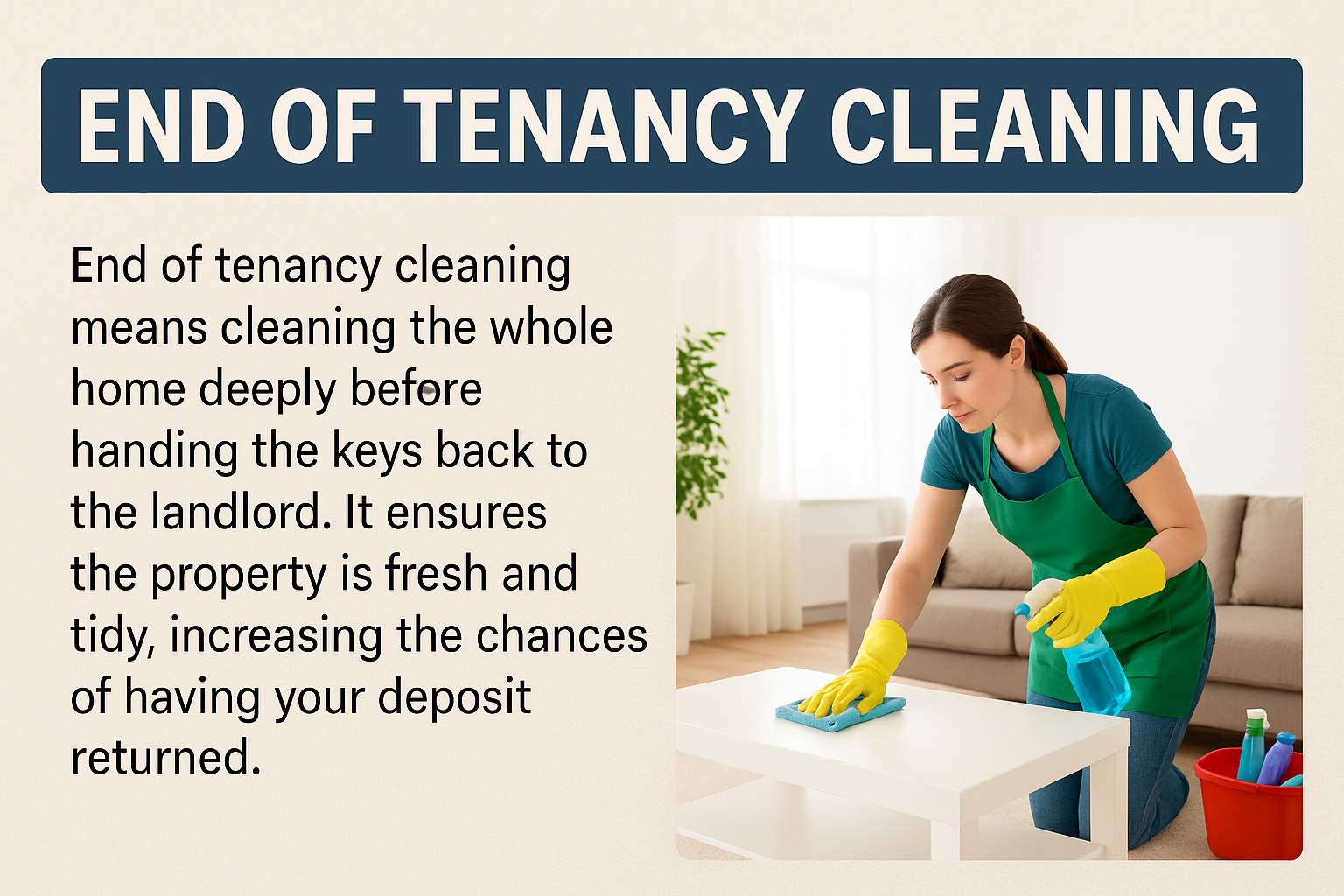

Moving out of a home can feel stressful, and one of the biggest worries is losing your deposit. This is why End of Tenancy Cleaning is very important. When you clean the home properly, the landlord can see that you respected the property, and this increases your chance of getting your full money back. Many people also choose Domestic Cleaning or Deep Cleaning Services to help make the process faster. No matter your choice, understanding how to do a complete Moving In/Moving Out Clean will make the move easier and more successful.
What Is End of Tenancy Cleaning and Why It Matters
End of Tenancy Cleaning means cleaning the whole home deeply before handing the keys back to the landlord. It is different from normal cleaning because every area must look fresh, tidy, and ready for the next tenant. Landlords often compare the property to the condition report from your move-in day. If they find dust, stains, grease, or damage, they may take money from your deposit.
Many renters in the UK, especially people who use Domestic Cleaning in Southend on Sea, already know that a clean final home helps avoid problems. This is why they follow strict checklists or hire Deep Cleaning Services when needed.
How Clean Should the Home Be at the End of a Tenancy?
The UK renting rules do not force tenants to hire professional cleaners, but the property must be cleaned to a professional level. A normal wipe is not enough. End of Tenancy Cleaning must include washing inside appliances, removing limescale, cleaning carpets, wiping every shelf, and making sure no dirt is left behind.
Landlords expect these things:
No marks on walls, no bad smells, no limescale in the bathroom, no food stains, no grease on kitchen appliances, clean floors, clean carpets, dust-free shelves, empty bins, and clear windows.
If anything is missed, the landlord may use your deposit to pay for Domestic Cleaning or call cleaners themselves.
Deepest Cleaning Tips for the Kitchen
The kitchen is usually the hardest area in End of Tenancy Cleaning, because grease and food marks build up over time. Many tenants lose deposit money due to a dirty oven, greasy cupboards, or stained worktops. To avoid this, take extra care here.
Clean the oven and hob by using a strong oven cleaner to remove burnt food. Clean the racks, door glass, and knobs. Remove stains from the hob until it looks shiny.
Clean the fridge and freezer by defrosting the freezer and washing removable shelves. Wipe all surfaces and remove old smells.
Wash the sink and taps since limescale collects around them. Make the sink shine so the kitchen looks fresh.
Wipe cupboards inside and outside and clean the handles, as they collect grease. This is a key part of any Moving In/Moving Out Clean.
Bathroom Deep Cleaning Guide
The bathroom needs strong cleaning because landlords always check for limescale, mould, and soap marks. If you do not clean well, they may call Deep Cleaning Services.
Clean the shower and bath by scrubbing tiles and removing soap marks. Clean shower glass with anti-limescale spray.
Clean the toilet using toilet cleaner inside the bowl. Wipe the outside, the seat, and the base to avoid bad smells.
Shine the sink and mirror by removing water marks and using glass cleaner to brighten the mirror.
Living Room Cleaning Tips
The living room is where dust collects the most. A good End of Tenancy Cleaning must include every small corner and surface.
Dust all areas including shelves, tables, TVs, lamps, and ceiling corners. Dust makes the home look old, so remove it carefully.
Clean carpets or floors by vacuuming slowly and removing stains with carpet shampoo. Mop wooden floors with the right cleaner.
Clean windows and curtains because bright windows help the room look fresh. Clean curtains if they seem dusty.
Bedroom Cleaning Tips
Bedrooms must look fresh and tidy. Since people sleep here, landlords expect it to be clean and odour-free.
Clean inside wardrobes by wiping shelves and cleaning mirrors if they are part of the wardrobe.
Vacuum the floor to remove dust and hair. Clean under the bed as well. Mop wooden floors if needed.
Wipe window sills because they often collect dust, making the room look dull.
Hallway and Stairs
These areas are often forgotten, but they are part of full End of Tenancy Cleaning.
Vacuum the stairs fully, including the edges.
Clean the doors and handles since they collect fingerprints and dirt.
Checklist for a Perfect End-of-Tenancy Home
A complete Moving In/Moving Out Clean must include all shelves dusted, appliances cleaned, kitchen degreased, bathroom limescale removed, vacuumed floors, washed carpets, clear windows, empty wardrobes, empty bins, and no rubbish left behind.
This checklist helps you finish every important task.
Common Mistakes Tenants Make
Many renters make cleaning mistakes that cost them part of their deposit. Understanding these mistakes helps you avoid them.
Forgetting inside appliances like ovens or microwaves is common. Landlords always check these.
Not removing limescale makes bathrooms look badly cleaned.
Leaving marks on walls can lead to deposit deductions.
Rushing the last day often causes missed spots, so plan ahead for your End of Tenancy Cleaning.
When Should You Call Professional Cleaners?
Some tenants prefer to hire Deep Cleaning Services because they offer faster and easier results. This is very common in places like Domestic Cleaning in Southend on Sea where many people move often.
You should consider hiring professionals if you lack time, have a large home, need a cleaning receipt, want deposit guarantees, or face hard stains.
Benefits of Hiring Domestic Cleaning or Deep Cleaning Services
Professional cleaners bring many benefits.
They use better tools such as steam cleaners and strong products that remove deep dirt.
They work fast because teams cover many rooms at once.
They guarantee quality and often return for free if the landlord is not satisfied.
DIY vs Professional Cleaning: Which One Is Better?
Both DIY cleaning and hiring cleaners have benefits.
DIY cleaning is cheaper and good for small homes if you have time.
Professional cleaning is better for large homes, deep stains, or when you want a no-stress End of Tenancy Cleaning.
Many tenants prefer doing basic cleaning themselves and hiring a company for harder tasks.
Frequently Asked Questions (FAQs)
1. What is End of Tenancy Cleaning?
End of Tenancy Cleaning is a deep clean done before leaving a rented home to make sure it is ready for the next tenant.
2. Do I need professional cleaners for End of Tenancy Cleaning?
No, but hiring professionals can help you reach a higher cleaning standard and protect your deposit.
3. What areas do landlords check the most?
Landlords focus on the kitchen, bathroom, carpets, windows, and inside appliances like ovens and fridges.
4. How long does End of Tenancy Cleaning take?
It depends on the size of the home. A full clean can take between 4 to 10 hours.
5. Can End of Tenancy Cleaning help me get my full deposit back?
Yes, a complete and careful clean improves your chance of receiving 100% of your deposit.
Final Thoughts
A complete End of Tenancy Cleaning helps you get your full deposit back and avoid issues with your landlord. Cleaning room by room, following a checklist, and using good tools makes the home look fresh for the next tenant. Whether you choose DIY methods or get help from Domestic Cleaning, Deep Cleaning Services, or Domestic Cleaning in Southend on Sea, the important thing is to keep the home in the same clean condition it was at the start. With good planning, your Moving In/Moving Out Clean will be easy and stress-free.
Curious for more? Dive deeper on our site now! News Well
