
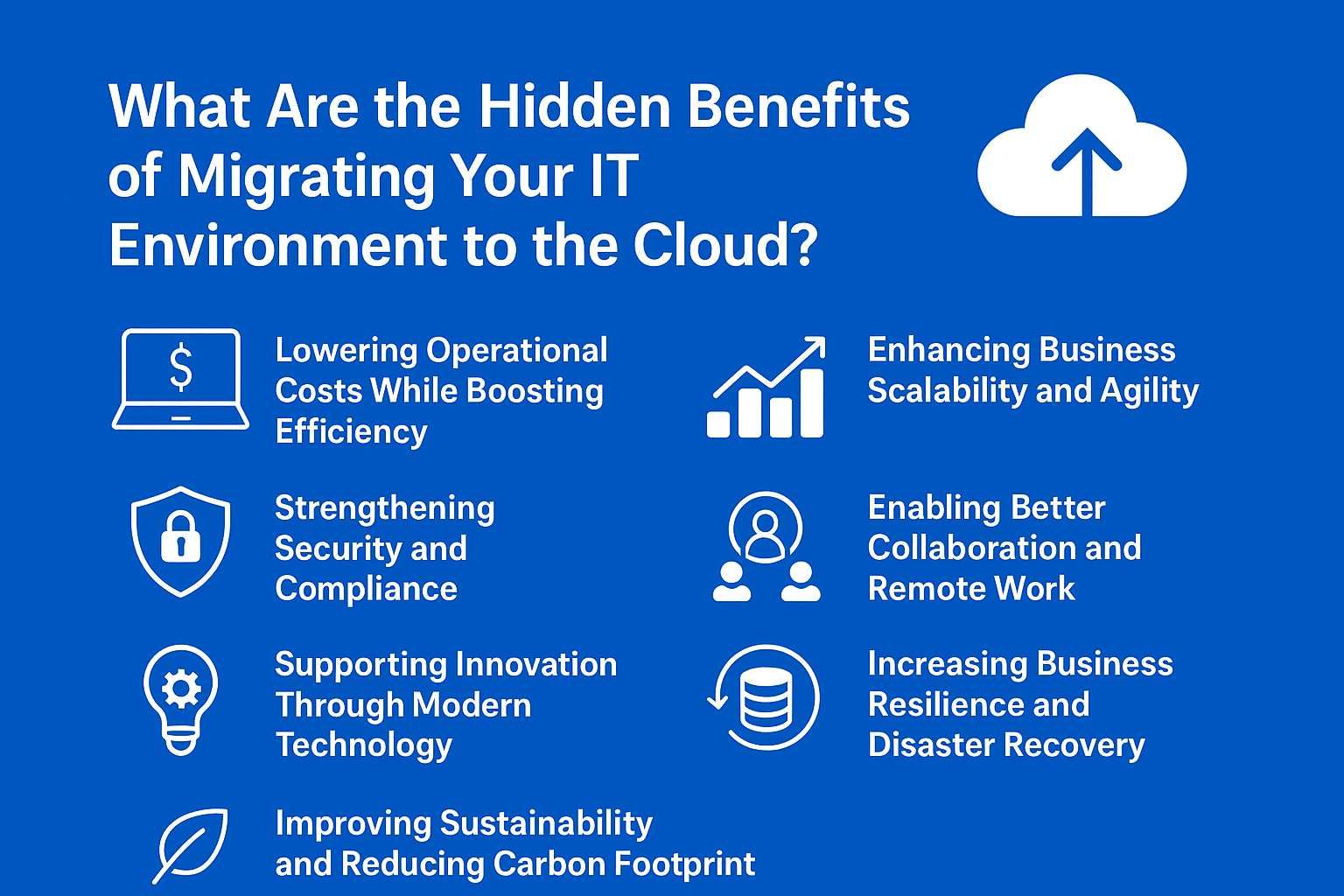

Moving your IT Environment to the cloud doesn’t just save money on servers and maintenance it changes how your entire business runs. The cloud makes it easier to collaborate, scale resources, and stay secure, all while improving flexibility and speed.
Still, many companies only focus on obvious benefits like cost savings or storage capacity. The truth is, there are hidden advantages that go far beyond that. From stronger security and better disaster recovery to improved innovation and employee productivity, cloud migration can give your organization a big edge. Let’s uncover these lesser-known benefits and explore how the cloud can help your business grow smarter and faster.
Understanding Cloud Migration
What Cloud Migration Means
Cloud migration simply means moving your company’s data, applications, and IT resources from on-premise servers to cloud-based platforms such as Microsoft Azure, Amazon Web Services (AWS), or Google Cloud Platform (GCP). Instead of maintaining your own physical servers, the cloud lets you rent virtual ones that scale up or down depending on your needs.
Why Businesses Move to the Cloud
Most companies switch to the cloud for flexibility and cost control. But the deeper reason is digital transformation — making technology work seamlessly to support daily operations, remote work, and fast decision-making.
With a proper migration plan, businesses can modernize their IT systems, reduce downtime, and create a more agile infrastructure that adapts to change easily.
Lowering Operational Costs While Boosting Efficiency
The Problem: High Maintenance and Hardware Costs
Traditional IT setups require constant updates, hardware replacements, and energy costs to keep servers running. Managing physical infrastructure also means downtime during upgrades or repairs, which impacts productivity.
The Solution: Pay-as-You-Go Flexibility
The cloud eliminates these issues by offering a pay-as-you-go model. You only pay for the resources you use — no more spending on unused storage or idle servers. Plus, automatic software updates reduce manual maintenance.
Over time, this not only cuts costs but also improves overall IT efficiency, freeing up your team to focus on strategic projects instead of day-to-day troubleshooting.
Enhancing Business Scalability and Agility
The Problem: Limited Growth with On-Premise Infrastructure
When a business grows, its data storage and processing needs expand. Traditional systems often can’t keep up without major upgrades, which are costly and time-consuming.
The Solution: Instant Scalability in the Cloud
One of the hidden strengths of cloud infrastructure is elastic scalability. With providers like AWS, Azure, and Google Cloud, you can instantly increase or decrease computing power to match demand.
For example, e-commerce websites can handle traffic spikes during holiday seasons without buying extra hardware. This flexibility makes your business more agile — ready to handle both growth and change without delays or extra costs.
Strengthening Security and Compliance
The Problem: Growing Cybersecurity Risks
Cyberattacks and data breaches are becoming more sophisticated. Many small and mid-sized businesses lack the resources to manage security effectively, leaving sensitive data vulnerable.
The Solution: Built-In Cloud Security Features
Modern cloud platforms provide enterprise-grade security that’s difficult to achieve on your own. Providers like Microsoft Azure Security Center and AWS Identity and Access Management (IAM) offer encryption, continuous monitoring, and automated threat detection.
Additionally, most cloud platforms comply with major security standards like HIPAA, GDPR, and SOC 2, ensuring your data meets both legal and industry-specific requirements. This means you not only stay secure but also compliant — all without hiring extra specialists.
Enabling Better Collaboration and Remote Work
The Problem: Disconnected Teams and Delayed Communication
Before cloud adoption, teams often struggled with outdated communication tools, version control issues, and limited remote access. This led to slower decision-making and productivity loss.
The Solution: Cloud-Based Collaboration Tools
With cloud IT solutions, employees can work from anywhere and access data in real time. Platforms like Microsoft 365, Google Workspace, and Slack allow instant collaboration on documents, spreadsheets, and projects.
This flexibility improves communication and helps businesses adapt easily to remote or hybrid work models. The result? Stronger teamwork, faster response times, and happier employees.
Supporting Innovation Through Modern Technology
The Problem: Legacy Systems Slow Innovation
Outdated hardware and software can limit your ability to adopt new technologies like Artificial Intelligence (AI) or Machine Learning (ML). Many businesses spend too much time maintaining old systems instead of developing new solutions.
The Solution: Access to Advanced Tools and Automation
The cloud provides direct access to cutting-edge technologies such as AI analytics, Big Data tools, and Internet of Things (IoT) platforms. These tools can process large data sets, automate workflows, and generate insights that help you make faster, data-driven decisions.
For instance, using Google Cloud AI or Azure Machine Learning, companies can analyze customer behavior, predict trends, and optimize operations — all within the cloud environment.
Increasing Business Resilience and Disaster Recovery
The Problem: Downtime and Data Loss During Crises
Hardware failures, power outages, or natural disasters can wipe out important data stored locally. Without a reliable backup strategy, recovery can take days or weeks, leading to lost revenue and customer trust.
The Solution: Cloud Backup and Disaster Recovery
One of the most valuable — yet often overlooked — benefits of the cloud is its disaster recovery capability. With automated cloud backups, your data is stored securely in multiple geographic locations.
If an issue occurs, you can restore data quickly and continue business operations with minimal downtime. This not only prevents data loss but also builds long-term business resilience and customer confidence.
Improving Sustainability and Reducing Carbon Footprint
The Problem: Traditional Data Centers Consume Massive Energy
Running in-house data centers requires large amounts of electricity to power and cool equipment, which increases carbon emissions.
The Solution: Eco-Friendly Cloud Operations
Major cloud providers like Amazon Web Services, Google Cloud, and Microsoft Azure are investing in renewable energy and sustainable infrastructure. By using their platforms, businesses reduce their environmental footprint.
Migrating to the cloud means sharing optimized resources across data centers designed for efficiency, which helps you meet sustainability goals without compromising performance.
Simplifying IT Management and Reducing Complexity
The Problem: Too Many Systems to Manage
Managing multiple servers, software updates, and security patches is time-consuming. It often takes up most of your IT department’s day.
The Solution: Centralized Cloud Management
Cloud platforms come with management dashboards and automation tools that make it easy to monitor performance, track costs, and deploy applications from a single interface.
For example, using Azure Monitor or AWS CloudWatch, IT teams can oversee the entire infrastructure in real time and automate responses to potential issues — saving time, effort, and stress.
Future-Proofing Your Business
The Problem: Technology Outpaces Traditional Infrastructure
Technology changes fast. Hardware upgrades and system migrations can quickly become outdated.
The Solution: Continuous Updates and Innovation
The cloud is designed to evolve. Providers constantly roll out updates, new features, and stronger security protocols. This ensures your systems stay modern and competitive without expensive overhauls.
With scalable resources, built-in analytics, and integration options, your business remains ready for whatever the future brings — from new apps to AI-driven automation.
Conclusion
Migrating your IT infrastructure to the cloud is more than a tech upgrade — it’s a strategic move that shapes the future of your business. Beyond saving money, the hidden benefits include stronger security, better collaboration, greater agility, and improved resilience.
The cloud helps you adapt quickly, innovate faster, and protect what matters most. Whether you’re a small startup or a growing enterprise, cloud migration isn’t just about staying current — it’s about building a smarter, more sustainable future.
Curious for more? Dive deeper on our site now! News Well
