
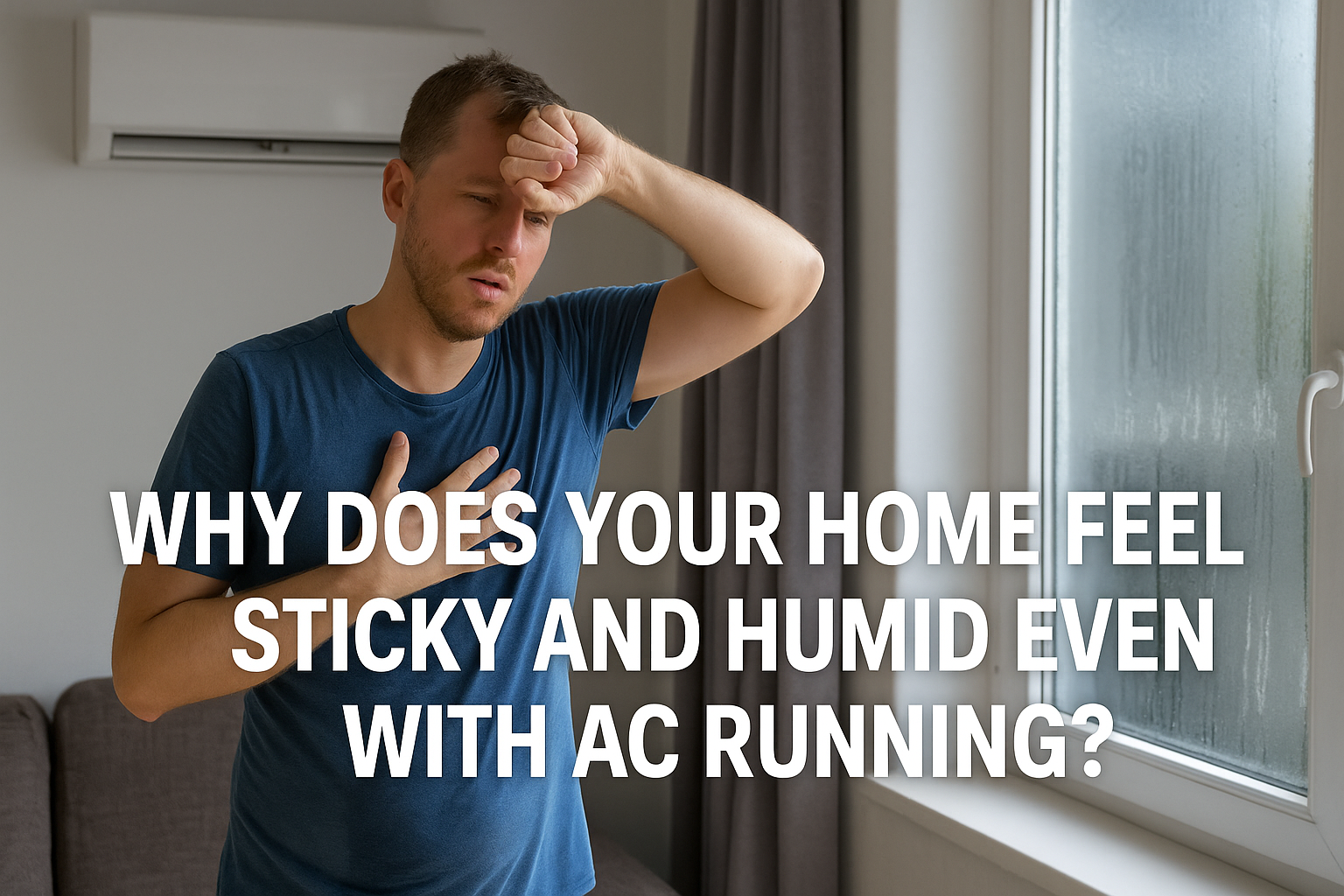

Your air conditioner is running, the temperature feels cool, but your home still feels sticky, damp, and uncomfortable. This is one of the most confusing and frustrating problems homeowners face. Even when the AC is working, the air inside may feel heavy and moist almost like the humidity outside has crept indoors. You may notice sticky skin, clammy furniture, slow-drying clothes, or a musty smell that lingers around the rooms.
Humidity problems can make your home feel hotter than it really is, and they can also affect sleep, comfort, and indoor air quality. Many homeowners assume the AC is broken, but the truth is that several hidden factors can cause humidity to rise even when the cooling system seems to be doing its job.
Why AC Alone Doesn’t Always Remove Enough Humidity
AC Systems Focus on Cooling First, Not Moisture Removal
Central Air conditioners cool the air by pulling heat out of it. Humidity removal happens as a side effect. If your AC cools too fast or cycles off too often, it won’t stay on long enough to remove moisture from the air.
Oversized Units Cool Too Quickly Without Dehumidifying Properly
When an AC is too large for the home, it blasts cold air fast and shuts off. This is called “short cycling.” The home feels cold but damp because the moisture never gets pulled out.
Dirty Coils Prevent the AC From Removing Moisture
The evaporator coil is where cooling and dehumidifying happen. A dirty coil can’t absorb heat or humidity the way it should, causing sticky indoor air.
How Humidity Builds Up Even When the AC Runs
Warm Outside Air Sneaks Into the Home Through Leaks
If your home has gaps around doors, windows, or ductwork, warm air seeps inside. This air carries moisture that the AC must remove. When the leaks are too big, the system gets overwhelmed.
Poor Ventilation Keeps Moisture Trapped Indoors
Cooking, showering, cleaning, and even breathing add water vapor to the air. Without proper ventilation or exhaust fans, this moisture lingers.
High Outdoor Humidity Overloads the System
Some areas experience extreme humidity in summer. When moisture levels are high outdoors, it takes longer for your AC to reduce indoor humidity to a comfortable level.
Signs Your Home Has a Humidity Problem Even If It Feels Cool
Sticky Skin and Damp Clothing
If your skin feels clammy indoors, moisture levels are too high.
Musty Odors Around Furniture or Carpets
Moisture settles into fabrics and carpets, causing mildew-like smells.
Foggy Windows or Moisture Around Window Frames
Condensation on glass points to trapped indoor humidity.
Wood Furniture Begins to Warp or Swell
Excess moisture affects flooring, cabinets, and wooden structures.
Longer Drying Times for Towels and Clothes
Humidity slows evaporation, causing fabrics to stay damp.
Why AC Problems Lead to Indoor Humidity Buildup
Clogged Filters Restrict Airflow
A dirty air filter traps dust and reduces airflow. Less air moves across the coil, making it harder for the system to dehumidify.
Low Refrigerant Levels Reduce Cooling and Moisture Removal
Refrigerant removes heat and humidity. Low levels make it impossible for the AC to reduce moisture effectively.
Leaky Ducts Pull Humid Air Into the System
Leaks in the ducts can pull warm, moist air from the attic or crawlspace. This raises indoor humidity and reduces cooling efficiency.
Improper Fan Settings Push Moist Air Back Into the Rooms
If your AC fan is set to “On” instead of “Auto,” it blows warm air over the coil even when the system is not cooling. This adds moisture back into the home.
How Home Habits Raise Indoor Humidity Without You Realizing
Running Hot Showers Without Ventilation
Bathroom steam quickly spreads through the home if the exhaust fan isn’t used.
Boiling Water, Cooking, or Dishwashing Without Vent Fans
Kitchen moisture raises humidity fast when the AC can’t keep up.
Drying Laundry Indoors or Running a Damp Basement
Damp clothes and wet basements act as moisture sources that feed humidity into the air.
Leaving Windows Open in Humid Weather
Even a small opening lets in a large amount of moist air.
How a Central AC System Is Supposed to Remove Humidity
The Evaporator Coil Cools and Condenses Moisture
As warm air passes over the coil, moisture condenses into water droplets and drains outside. This process lowers humidity when the system runs long enough.
Long Cooling Cycles Improve Moisture Control
Short cooling cycles remove less humidity. Longer cycles give the AC time to pull moisture out of the air.
Balanced Airflow Helps Moisture Move Through the System
Proper duct design and clean filters support even humidity removal.
How to Fix High Humidity Even When the AC Is Running
Use the “Auto” Fan Setting Instead of “On”
This prevents the system from blowing moist air back into your home.
Replace Dirty Air Filters Regularly
A clean filter improves airflow and allows the coil to remove moisture effectively.
Get the Evaporator Coil Cleaned
A clean coil cools the air better and increases humidity removal.
Seal Window, Door, and Duct Leaks
Sealing gaps keeps humid air outside, reducing strain on the AC.
When You Need More Than Just the AC to Fix Humidity
Install a Whole-House Dehumidifier
These systems pull moisture from the air before the AC even starts working.
Improve Home Ventilation
Use bathroom fans, kitchen hoods, and attic vents to remove steam and moisture.
Upgrade an Oversized or Undersized AC Unit
A properly sized system reduces humidity better and maintains consistent temperatures.
Add a Smart Thermostat to Improve Cycle Timing
Smart systems adjust run times to balance cooling and dehumidification.
How Excess Indoor Humidity Affects Health and Comfort
Too Much Moisture Encourages Mold and Mildew Growth
Mold spreads fast in damp areas and can cause breathing problems.
Dust Mites Thrive in Humid Environments
High humidity increases dust mite activity, worsening allergies.
Indoor Air Feels Heavy and Hard to Breathe
Moist air reduces oxygen exchange and causes breathing discomfort.
High Humidity Makes Heat Feel Worse
Your body can’t cool itself properly when the air is damp.
How to Know if Your AC Is the Real Problem
The AC runs but doesn’t blow very cold air
This can indicate low refrigerant or airflow issues.
Your thermostat reads cool, but the air feels sticky
This is a sign of humidity, not temperature issues.
The unit turns on and off rapidly
Short cycling reduces dehumidification dramatically.
You see ice forming on the AC coils
Frozen coils mean poor performance and high humidity indoors.
Conclusion
If your home feels sticky and humid even when the AC is running, it’s a sign that your cooling system isn’t removing moisture the way it should. This can happen due to airflow problems, dirty coils, oversized units, duct leaks, or poor home ventilation. Humidity makes your home feel warmer, less comfortable, and more prone to mold, dust mites, and odors.
The good news is that humidity problems can be fixed. By improving airflow, sealing leaks, cleaning the system, or adjusting AC settings, you can reduce moisture and make your home more comfortable. In some cases, adding a dehumidifier or upgrading your cooling system creates the ideal indoor environment—cool, dry, and refreshing.
A balanced home is a comfortable home. When your AC and humidity control work together, you get better comfort, healthier air, and a more efficient system all year long.
Curious for more? Dive deeper on our site now! News Well
