


Instagram is entering a phase where communication inside the platform becomes just as important as the content itself. In 2026, a new interaction model emerges: businesses shift from reactive messaging to structured automated dialogue. This shift is driven by several factors: the growing volume of direct messages, increased competition for audience retention, algorithm changes prioritizing fast engagement, and new automation tools that eliminate the need for large support teams.
The new algorithm prioritizes speed, not volume
Instagram’s algorithms are gradually shifting toward evaluating communication quality. In 2026, three parameters become crucial:
- Response time to comments and messages.
- Consistency of interactions with users.
- Completion of dialogues: whether the communication leads to a concrete action.
Accounts that reply quickly, react to comments, and maintain a steady rhythm of dialogue receive more stable traffic and stronger placement in recommendations. Manual support at scale no longer works. This is why automated workflows become a standard rather than an optional feature.
The economics of micro-dialogues
Instagram is turning into a platform of short transactional interactions:
Inquiry → response → data collection → follow-up communication.
In 2026, these processes must be systematic. The “I’ll answer later” approach no longer works. Users expect instant actions: clarification of details, product previews, instructions, booking, or registrations. A new economy of micro-dialogues is forming — dozens of small exchanges that together create measurable value for a brand.
Structured automated funnels become essential. Without them, businesses lose 40–60% of incoming requests, especially at night or during peak hours.
Automation becomes an infrastructural element
In 2025, customer messaging in Instagram reached a historic high. In 2026, the volume grows even more — users increasingly treat Direct as an alternative to phone calls or websites. They expect:
- clear navigation inside the dialogue;
- accurate and instant responses;
- the ability to receive offers without human involvement;
- correct processing of personal data;
- stable communication regardless of the time of day.
Human teams cannot support this level of continuity. Automated tools built on chatbots enable the next stage — a shift from chaotic support management to controlled CRM-driven communication.
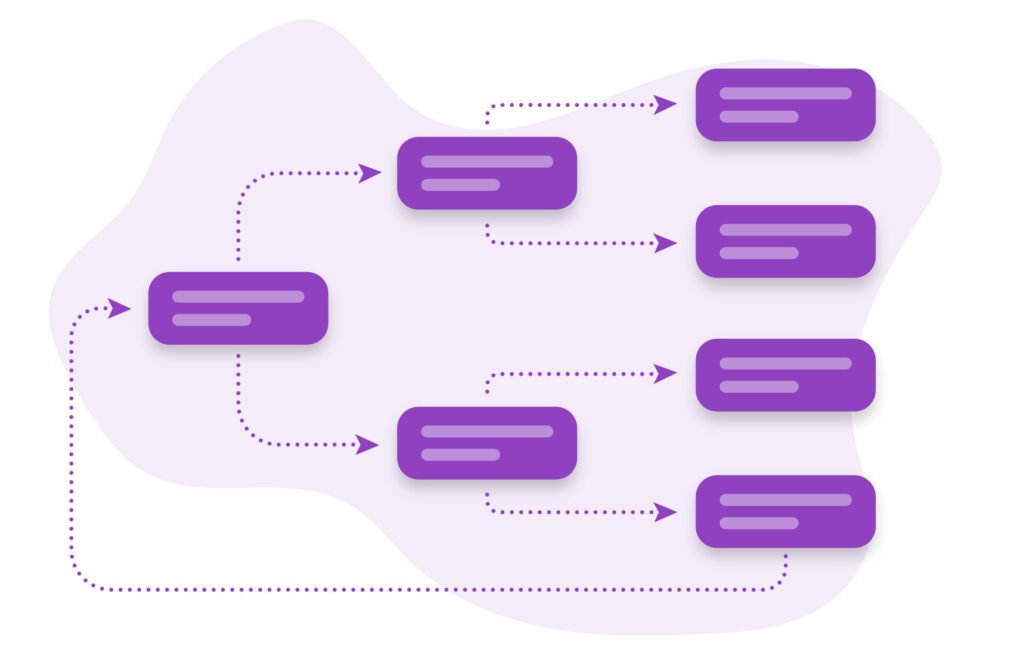
Communication standards of 2026
Several mandatory elements are forming:
1. Smart routing of conversations.
Users are given precise scenarios based on their goals: ordering, consultation, technical support, or clarifying details. The old model of “find any available manager” becomes obsolete.
2. Data verification and validation.
Phone numbers, emails, links, addresses — everything must be structured and automatically checked.
3. Automatic CRM data transfer.
This prevents data loss and eliminates errors that occur during manual entry.
4. Monitoring comments on posts and live streams.
Comments are a major trigger: Instagram boosts posts when communication is active and fast.
5. Automated message sequences.
Response chains that lead to sales, bookings, or consultations — without aggression, but with clear user guidance.
Impact on marketing structure
2026 reshapes the role of the SMM manager. The focus shifts to three areas:
- content strategy;
- designing automated workflows;
- dialogue analysis and optimization.
Routine work moves to chatbots. Specialists act as interaction architects: building logic, designing scenarios, and overseeing communication flows.
Businesses gain significant advantages: reduced response time, lower team workload, and increased quality of user handling.
Safety and action filtering
As Instagram tightens moderation in 2026, controlling automated processes becomes essential. The platform blocks suspicious activity, but properly configured chatbots remain within safe limits.
Key factors include:
- load distribution;
- avoidance of mass template responses;
- adaptive timing;
- context-aware interactions;
- minimal repetition of actions from the same IP.
This ensures that automation works without creating risks and maintains account stability.

The future of Instagram communication in 2026
The platform is moving toward a model where brands deliver not only content but also structured dialogue. Key elements include:
- real-time personalization;
- CRM integration;
- logically structured automated flows;
- monitoring user behavior;
- automatic continuation of the conversation after pauses.
This creates an environment where every interaction becomes part of a system. Engagement no longer depends on the size of the support team — only on the quality of the tools.
The role of SMMbot in this ecosystem
When implementing automated dialogue models, the platform you use must provide the ability to:
- build chatbots without programming;
- filter and validate user data;
- store information in a CRM;
- automatically track comments under posts and streams;
- configure response sequences;
- operate strictly within Instagram’s safe action limits.
SMMbot chatbot for Instagram already includes these capabilities, helping businesses work with Instagram systematically, without losing information and without account risks.
Conclusion
Instagram is entering a new stage where automated communication becomes a primary growth vector. In 2026, speed, precision, and structured interaction outweigh content volume.
Chatbots become a core infrastructural element, and services like SMMbot deliver stability, systemization, and controlled dialogue management.
